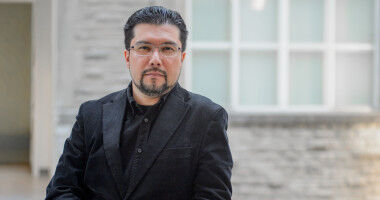
Artists and architects think differently compared to other people
Architects, painters and sculptors conceive of spaces in different ways from other people and from each other, finds a new study by UCL and Bangor University researchers. When asked to talk about images of places, painters are more likely to describe the depicted space as a two-dimensional image, while architects are more likely to focus on paths and the boundaries of the space. 'We found that painters, sculptors and architects consistently showed signs of their profession when talking about the spaces we showed them, and all three groups had more elaborate, detailed descriptions than people in unrelated professions,' said senior author Dr Hugo Spiers (UCL Psychology & Language Sciences). For the study, published in Cognitive Science , the researchers brought in 16 people from each of the three professions - they all had at least eight years of experience and included Sir Anthony Gormley - alongside 16 participants without any relevant background, who acted as controls. The participants were presented with a Google Street View image, a painting of St. Peter's Basilica, and a computer-generated surreal scene. They had to describe the environment, explain how they would explore the space, and suggest changes to the environment in the image. The researchers categorised elements of the responses for both qualitative and quantitative analyses using a novel technique called Cognitive Discourse Analysis, developed by one of the co-authors, Dr Thora Tenbrink (Bangor University), designed to highlight aspects of thought that underlie linguistic choices, beyond what speakers are consciously aware of.