

Environment - Mar 25
UCalgary expedition, with NASA, Canadian and European space agencies, sets out to better understand state of Arctic ice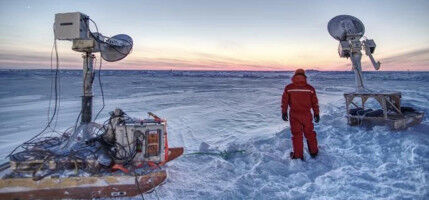
UCalgary expedition, with NASA, Canadian and European space agencies, sets out to better understand state of Arctic ice
Social Sciences - Today
Young people's wellbeing is improving in Greater Manchester, major survey finds
Young people's wellbeing is improving in Greater Manchester, major survey finds

Environment - Today
Australia's environment is improving but climate change is 'accelerating' damage to ecosystems and wildlife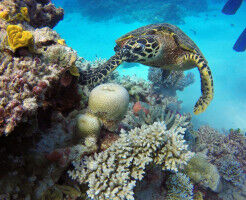
Australia's environment is improving but climate change is 'accelerating' damage to ecosystems and wildlife

Psychology - Mar 23
The grief myth: it doesn't come in stages or follow a checklist - like love, it endures
The grief myth: it doesn't come in stages or follow a checklist - like love, it endures


History & Archeology - Mar 23
The UV has played a part in the discovery of a 3,500-year-old loom that sheds light on key aspects of the Bronze Age textile revolution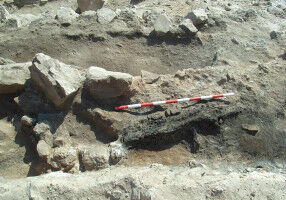
The UV has played a part in the discovery of a 3,500-year-old loom that sheds light on key aspects of the Bronze Age textile revolution
Innovation - Mar 23
The University of Valencia launches ClioViz, an open digital platform for accessing cultural heritage data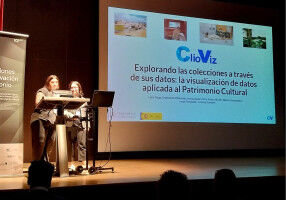
The University of Valencia launches ClioViz, an open digital platform for accessing cultural heritage data

Social Sciences - Mar 23
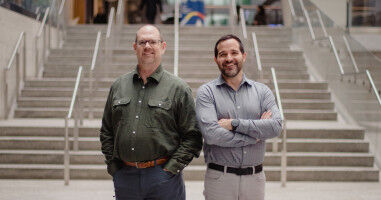
Study links higher concentration of pokie machines to increase in family and domestic violence
Study links higher concentration of pokie machines to increase in family and domestic violence
Health - Mar 23
Screening blitz could achieve cervical cancer elimination among Indigenous communities within a generation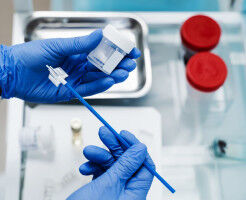
Screening blitz could achieve cervical cancer elimination among Indigenous communities within a generation
Computer Science - Mar 20
New computer chip material inspired by the human brain could slash AI energy use
New computer chip material inspired by the human brain could slash AI energy use
news
University College London
Results 1641 - 1660 of 2143.
Astronomy & Space - 27.02.2017
First evidence of rocky planet formation in Tatooine system
Evidence of planetary debris surrounding a double sun, 'Tatooine-like' system has been found for the first time by a UCL-led team of researchers. Published today in Nature Astronomy and funded by the Science and Technology Facilities Council and the European Research Council, the study reports on the remains of shattered asteroids orbiting a double sun consisting of a white dwarf and a brown dwarf roughly 1000 light-years away in a system called SDSS 1557.
Agronomy & Food Science - Health - 23.02.2017
Long-term stress linked to higher levels of obesity
People who suffer long-term stress may also be more prone to obesity, according to research by scientists at UCL which involved examining hair samples for levels of cortisol, a hormone which regulates the body's response to stress. The paper, published in the journal Obesity , showed that exposure to higher levels of cortisol over several months is associated with people being more heavily, and more persistently, overweight.
Health - Psychology - 22.02.2017
Cat ownership not linked to mental health problems
New UCL research has found no link between cat ownership and psychotic symptoms, casting doubt on previous suggestions that people who grew up with cats are at higher risk of mental illness. Recent research has suggested that cat ownership might contribute to some mental disorders, because cats are the primary host of the common parasite Toxoplasma Gondii (T.
Sport - Life Sciences - 15.02.2017
Evidence of brain damage found in former footballers
Evidence of chronic traumatic encephalopathy (CTE), a potential cause of dementia caused by repeated blows to the head, has been found in the brains of former association football (soccer) players examined at the UCL Queen Square Brain Bank. The study, funded by The Drake Foundation and published in the journal Acta Neuropathologica , looked at 14 retired footballers with dementia who were referred to the Old Age Psychiatry Service in Swansea, Wales, between 1980 and 2010.
Social Sciences - 10.02.2017
Key friendships vital for effective human social networks
Close friendships facilitate the exchange of information and culture, making social networks more effective for cultural transmission, according to new UCL research that used wireless tracking technology to map social interactions in remote hunter-gatherer populations. The research demonstrates how increased network efficiency is achieved through investment in a few strong links between non-kin friends connecting unrelated families, as well as showing that strong friendships are more important than family ties in predicting levels of shared knowledge among individuals.
Health - 07.02.2017
E-cigarettes safer than smoking says long-term study
E-cigarettes are less toxic and safer to use compared to conventional cigarettes, according to research published in Annals of Internal Medicine . Scientists at UCL found that people who swapped smoking regular cigarettes for e-cigarettes or nicotine replacement therapy (NRT) for at least six months, had much lower levels of toxic and cancer causing substances in their body than people who continued to use conventional cigarettes.
Health - Life Sciences - 03.02.2017
’Brute force’ can overcome antibiotic resistance
Antibiotics can still kill drug-resistant bacteria if they 'push' hard enough into bacterial cells, finds new UCL-led research funded by the Engineering and Physical Sciences Research Council. The study opens up a promising new way of overcoming antibiotic resistance and could help scientists to design even more effective drugs.
Health - Life Sciences - 31.01.2017
New non-invasive test to detect bladder cancer could spare patients cystoscopy
A new test for bladder cancer could enable GPs to test a urine sample and spare patients the discomfort of a cystoscopy in hospital, according to UCL research published today in Clinical Epigenetics. The test, called UroMark, has been developed by UCL researchers and uses cutting edge genomic sequencing to detect abnormal cancer DNA in a urine sample.
Chemistry - Life Sciences - 30.01.2017
Gene key for chemically reprogramming human stem cells
Scientists have discovered the gene essential for chemically reprogramming human amniotic stem cells into a more versatile state similar to embryonic stem cells, in research led by UCL and Heinrich Heine University. The finding is an important step towards deriving reprogrammed cells that could be stored and used in therapies and research, providing an ethical alternative to human embryonic stem cells.
Life Sciences - Health - 25.01.2017
HIV breaches macrophage defences, could be step towards cure
A team led by UCL researchers has identified how HIV is able to infect macrophages, a type of white blood cell integral to the immune system, despite the presence of a protective protein. They discovered a treatment that can maintain macrophage defences which could be a key part of the puzzle of reaching a complete cure for HIV/AIDS.
Life Sciences - Health - 18.01.2017
Delirium could accelerate dementia-related mental decline
When hospitalised, people can become acutely confused and disorientated. This condition, known as delirium, affects a quarter of older patients and new research by UCL and University of Cambridge shows it may have long-lasting consequences, including accelerating the dementia process. The study, published today in the journal JAMA Psychiatry, is the first to show the multiplying effects of delirium and dementia in these patients.
Environment - 13.01.2017
Mapping movements of alien bird species
The global map of alien bird species has been produced for the first time by a UCL-led team of researchers. It shows that human activities are the main determinants of how many alien bird species live in an area but that alien species are most successful in areas already rich with native bird species.
Life Sciences - Health - 11.01.2017
Supporting actors take lead role as our brains age
The main changes in our brains as we get older are in the brain cells with a supporting role, called glial cells, British scientists have found. The surprising finding in a study by researchers at UCL and the Francis Crick Institute is published in the journal Cell Reports. The researchers also found that the greatest changes in glial cells as we age are in the brain regions most often damaged by neurodegenerative disease, like Alzheimer's and Parkinson's.
Health - Life Sciences - 10.01.2017
High-sugar diet programmes a short lifespan in flies
Flies with a history of eating a high sugar diet live shorter lives, even after their diet improves. This is because the unhealthy diet drives long-term reprogramming of gene expression, according to a UCL-led team of researchers. The study, published today in Cell Reports , discovered that the action of a gene called FOXO is inhibited in flies given a high sugar diet in early life, causing long-term effects.
Health - 10.01.2017
New model predicts when people are willing to try new things
A new model to predict when people are most likely to try different products has been developed by scientists at UCL and dunnhumby, a customer science company. The research could help to direct public health interventions aimed at encouraging healthier choices. The team analysed anonymous purchase data from over 280,000 shoppers who regularly bought products in six categories: beers, breads, coffees, toilet papers, washing detergents and yogurts.
Life Sciences - Health - 20.12.2016
Gene discovery helps children with movement disorder walk again
UCL researchers have discovered a new genetic cause for dystonia, a movement disorder, enabling treatment with Deep Brain Stimulation which has been so successful that children have been able to walk again. The team of researchers from UCL Great Ormond Street Institute of Child Health, University of Cambridge and the NIHR Rare Disease Bioresource have identified mutations in a gene, called KMT2B, in 28 patients with dystonia.
Health - 19.12.2016
Neglect and abuse in childhood could have long-term economic consequences
People who suffer neglect and abuse in childhood are much more likely to have time off work due to long-term sickness and less likely to own their own homes when they reach middle age than their peers, according to new research undertaken at UCL. The study, which is published in U.S. journal Pediatrics and undertaken as part of the Public Health Research Consortium, showed that the potential socioeconomic impact of child neglect and abuse may persist for decades.
Astronomy & Space - 12.12.2016
Detecting weather on a gas giant exoplanet
Signs of powerful changing winds have been detected on an exoplanet 16 times larger than Earth, according to a team involving UCL scientists. It's the first time that weather systems have been found on a gas giant outside the solar system. Led by the University of Warwick, the researchers discovered that the gas giant HAT-P-7b, which is located over 1000 light years away, is affected by large scale changes in strong winds moving across the planet, likely leading to catastrophic storms.
Physics - Earth Sciences - 09.12.2016
Understanding how ice crystals form in clouds
How ice forms on the surfaces of mineral dust particles in the atmosphere has been revealed by a team from UCL and the Karlsruhe Institute of Technology (KIT) in Germany. More than 90% of precipitation over land relies on the formation of ice crystals on airborne aerosol particles but why only a tiny fraction of all atmospheric particles can initiate ice growth is unknown.
Health - Administration - 05.12.2016
Women with dementia receive less medical attention
Women with dementia have fewer visits to the GP, receive less health monitoring and take more potentially harmful medication than men with dementia, new UCL research reveals. The study, published in Age and Ageing, also found that only half of all dementia patients had a documented annual review even though GP surgeries are offered financial incentives to carry these out.


Environment - Mar 25
UCalgary expedition, with NASA, Canadian and European space agencies, sets out to better understand state of Arctic ice
UCalgary expedition, with NASA, Canadian and European space agencies, sets out to better understand state of Arctic ice
Social Sciences - Today
Young people's wellbeing is improving in Greater Manchester, major survey finds
Young people's wellbeing is improving in Greater Manchester, major survey finds
Environment - Today
Australia's environment is improving but climate change is 'accelerating' damage to ecosystems and wildlife
Australia's environment is improving but climate change is 'accelerating' damage to ecosystems and wildlife
Psychology - Mar 23
The grief myth: it doesn't come in stages or follow a checklist - like love, it endures
The grief myth: it doesn't come in stages or follow a checklist - like love, it endures
History & Archeology - Mar 23
The UV has played a part in the discovery of a 3,500-year-old loom that sheds light on key aspects of the Bronze Age textile revolution
The UV has played a part in the discovery of a 3,500-year-old loom that sheds light on key aspects of the Bronze Age textile revolution
Innovation - Mar 23
The University of Valencia launches ClioViz, an open digital platform for accessing cultural heritage data
The University of Valencia launches ClioViz, an open digital platform for accessing cultural heritage data
Social Sciences - Mar 23
Study links higher concentration of pokie machines to increase in family and domestic violence
Study links higher concentration of pokie machines to increase in family and domestic violence
Health - Mar 23
Screening blitz could achieve cervical cancer elimination among Indigenous communities within a generation
Screening blitz could achieve cervical cancer elimination among Indigenous communities within a generation
Computer Science - Mar 20
New computer chip material inspired by the human brain could slash AI energy use
New computer chip material inspired by the human brain could slash AI energy use