

Environment - Mar 25
UCalgary expedition, with NASA, Canadian and European space agencies, sets out to better understand state of Arctic ice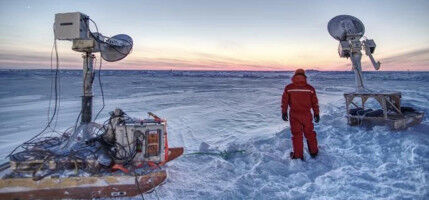
UCalgary expedition, with NASA, Canadian and European space agencies, sets out to better understand state of Arctic ice
Social Sciences - Today
Young people's wellbeing is improving in Greater Manchester, major survey finds
Young people's wellbeing is improving in Greater Manchester, major survey finds

Environment - Today
Australia's environment is improving but climate change is 'accelerating' damage to ecosystems and wildlife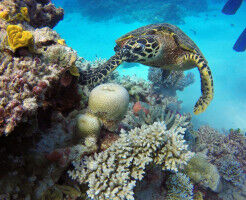
Australia's environment is improving but climate change is 'accelerating' damage to ecosystems and wildlife

Psychology - Mar 23
The grief myth: it doesn't come in stages or follow a checklist - like love, it endures
The grief myth: it doesn't come in stages or follow a checklist - like love, it endures


History & Archeology - Mar 23
The UV has played a part in the discovery of a 3,500-year-old loom that sheds light on key aspects of the Bronze Age textile revolution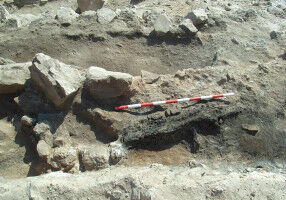
The UV has played a part in the discovery of a 3,500-year-old loom that sheds light on key aspects of the Bronze Age textile revolution
Innovation - Mar 23
The University of Valencia launches ClioViz, an open digital platform for accessing cultural heritage data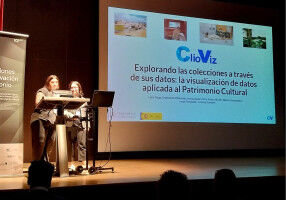
The University of Valencia launches ClioViz, an open digital platform for accessing cultural heritage data

Social Sciences - Mar 23
Study links higher concentration of pokie machines to increase in family and domestic violence
Study links higher concentration of pokie machines to increase in family and domestic violence
Health - Mar 23
Screening blitz could achieve cervical cancer elimination among Indigenous communities within a generation
Screening blitz could achieve cervical cancer elimination among Indigenous communities within a generation

Computer Science - Mar 20
New computer chip material inspired by the human brain could slash AI energy use
New computer chip material inspired by the human brain could slash AI energy use
news
University College London
Results 1681 - 1700 of 2143.
Life Sciences - Health - 30.08.2016
Refining the genetic causes of schizophrenia
An international study involving UCL has made advances in understanding the ways in which genetic risk factors alter gene function in schizophrenia. The study, published today in Genome Biology and funded by the Medical Research Council , combined genetic sequence information with measures of gene regulation in schizophrenia patients and matched controls.
Earth Sciences - Astronomy & Space - 30.08.2016
Quality not quantity greatest threat to key groundwater source
The greatest threat to sustainable groundwater in the Indo-Gangetic Basin is contamination and not depletion, according to a study co-authored by UCL researchers and published this week . Using groundwater measurements from across the region, the study reveals that over 60% of accessible groundwater is no longer safe to drink or usable for irrigation due to high concentrations of arsenic or salinity.
Astronomy & Space - Environment - 24.08.2016
Fossilised rivers suggest warm, wet ancient Mars
Extensive systems of fossilised riverbeds have been discovered on an ancient region of the Martian surface, supporting the idea that the now cold and dry Red Planet had a warm and wet climate about four billion years ago, according to UCL-led research. The study, published in Geology and funded by the Science & Technology Facilities Council and the UK Space Agency, identified over 17,000km of former river channels on a northern plain called Arabia Terra, providing further evidence of water once flowing on Mars.
Computer Science - Electroengineering - 22.08.2016
People favour expressive, communicative robots over efficient, effective ones
Making an assistive robot partner expressive and communicative is likely to make it more satisfying to work with and lead to users trusting it more, even if it makes mistakes, a new UCL-led study suggests. But the research also shows that giving robots human-like traits could have a flip side - users may even lie to the robot in order to avoid hurting its feelings.
Health - Life Sciences - 18.08.2016
Eye test may detect Parkinson’s before symptoms appear
A new low-cost and non-invasive eye test could detect Parkinson's disease before symptoms including tremors and muscle stiffness develop, according to new research in rats led by scientists at UCL. Researchers at the UCL Institute of Ophthalmology have discovered a new method of observing changes in the retina which can be seen in Parkinson's before changes in the brain occur and the first symptoms become evident.
Life Sciences - 11.08.2016
What makes mice freeze or flee
Mice are likely to freeze at the sight of small slow-moving shapes and flee from fast approaching ones, finds new UCL research. This provides the first evidence that mice make instinctive behavioural choices based on vision alone, and could help inform future studies of behaviour and brain function in mice.
Health - Life Sciences - 11.08.2016
New imaging platform tracks cancer progression
A new rapid fluorescent 3-D imaging system developed by UCL and Imperial College London scientists offers a non-invasive approach to accurately monitor tumour development in adult zebrafish. Animal testing is an essential step in developing new drugs for diseases; however, the process usually involves invasive procedures with animals that must be euthanized.
Health - 07.07.2016
Family upbringing has no impact on people’s food preferences
The effects of family upbringing on people's food preferences disappear as they start to make their own meal choices, to the point where they have no detectable impact by late adolescence, according to research carried out among a large group of older teenage twins by UCL and King's College London. Understanding the factors behind food preferences has important implications for politicians and clinicians.
Astronomy & Space - Physics - 07.07.2016
Accelerating research into dark energy
A quick method for making accurate, virtual universes to help understand the effects of dark matter and dark energy has been developed by UCL and CEFCA scientists. Making up 95% of our universe, these substances have profound effects on the birth and lives of galaxies and stars and yet almost nothing is known about their physical nature.
Astronomy & Space - Physics - 20.06.2016
Strong ’electric wind’ strips planets of oceans and atmospheres
Venus has an 'electric wind' strong enough to remove the components of water from its upper atmosphere, which may have played a significant role in stripping the planet of its oceans, according to a new study by NASA and UCL researchers. "It's amazing and shocking," said Dr Glyn Collinson, previously at UCL Mullard Space Science Laboratory and now a scientist at NASA's Goddard Space Flight Center.
Health - 14.06.2016
Heart drug could reduce diabetes related blindness
Researchers at UCL and Queen's University Belfast have discovered that a drug originally developed to treat cardiovascular disease has the potential to reduce diabetes related blindness. According to recent WHO global estimates, 422 million people have diabetes. One of the most common complications of this disease is vision loss.
Health - Life Sciences - 10.06.2016
Cancer drugs could target autoimmune diseases
Drugs currently being trialled in cancer patients have been used to successfully target an autoimmune condition in mice at UCL and King's College London. The study, published in Cell Reports, involved giving cancer drugs to mice and inducing uveitis, an incurable autoimmune eye condition responsible for 1 in every 10 cases of visual impairment in the UK*.
Life Sciences - Health - 03.06.2016
Declining dopamine may explain why older people take fewer risks
Older people are less willing to take risks for potential rewards and this may be due to declining levels of dopamine in the brain, finds a new UCL study of over 25,000 people funded by Wellcome. The study, published in Current Biology , found that older people were less likely to choose risky gambles to win more points in a smartphone app called The Great Brain Experiment.
Life Sciences - Health - 02.06.2016
Brain structure that tracks negative events backfires in depression
A region of the brain that responds to bad experiences has the opposite reaction to expectations of aversive events in people with depression compared to healthy adults, finds a new UCL study funded by the Medical Research Council. The study, published in Molecular Psychiatry, found that the habenula, a pea-sized region of the brain, functions abnormally in depression.
Health - Life Sciences - 24.05.2016
Research revealing early changes at epigenetic level points to possible new prevention strategies for ovarian cancer
The discovery of early changes in the cells of the Fallopian tubes of women carrying the BRCA genetic mutation could open the way for new preventative strategies for ovarian cancer, reducing the need for invasive surgery, according to research published today in science journal Nature. The research, undertaken by the Department of Women's Cancer at UCL led by Professor Martin Widschwendter and funded by The Eve Appeal, sought to understand why women with the BRCA1/2 mutations develop ovarian cancers and what happens in the cells where the cancers originate to trigger them.
Life Sciences - Environment - 19.05.2016
Genes for nose shape found
Genes that drive the shape of human noses have been identified by a UCL-led study. The four genes mainly affect the width and 'pointiness' of noses which vary greatly between different populations. The new information adds to our understanding of how the human face evolved and may help contribute to forensic DNA technologies that build visual profiles based on an individual's genetic makeup.
Health - Life Sciences - 17.05.2016
Bacterial immunization prevents PTSD-like symptoms in mice
Injecting mice with a UCL-discovered bacterium can reduce stress and inflammation, preventing them from developing PTSD-like conditions, finds a new international study led by the University of Colorado Boulder. The research, published in Proceedings of the National Academy of Sciences, found that mice injected with the bacterium were more resilient to stress, showing less fear and anxiety in stressful situations.
Health - Psychology - 17.05.2016
Two children in every class experience language disorders
Approximately two children in each Year 1 class will experience a clinically significant language disorder that impacts learning, according to a UCL-led study on language impairment at school entry age. The study, published in the Journal of Child Psychology and Psychiatry , found that children with unexplained language disorders have higher social, emotional and behavioural problems, with 88% failing to achieve early curriculum targets.
Health - 10.05.2016
Study points to failures in heart attack care in England and Wales
Around 33,000 deaths could have been avoided if heart attack aftercare guidelines outlining when to give treatment were followed, according to a study funded by the British Heart Foundation (BHF) looking at the frequency of missed opportunities to treat people after a heart attack.
Health - 09.05.2016
UCL Drug Discovery Institute launch
The Alzheimer's Research UK UCL Drug Discovery Institute was launched at an event last Wednesday 4 May as part of the Alzheimer's Research UK Drug Discovery Alliance. Part of a network of three Institutes, the UCL Drug Discovery Institute will work with its counterparts at the Universities of Oxford and Cambridge to support the translation of cutting-edge academic science towards new treatments for dementia.


Environment - Mar 25
UCalgary expedition, with NASA, Canadian and European space agencies, sets out to better understand state of Arctic ice
UCalgary expedition, with NASA, Canadian and European space agencies, sets out to better understand state of Arctic ice
Social Sciences - Today
Young people's wellbeing is improving in Greater Manchester, major survey finds
Young people's wellbeing is improving in Greater Manchester, major survey finds
Environment - Today
Australia's environment is improving but climate change is 'accelerating' damage to ecosystems and wildlife
Australia's environment is improving but climate change is 'accelerating' damage to ecosystems and wildlife
Psychology - Mar 23
The grief myth: it doesn't come in stages or follow a checklist - like love, it endures
The grief myth: it doesn't come in stages or follow a checklist - like love, it endures
History & Archeology - Mar 23
The UV has played a part in the discovery of a 3,500-year-old loom that sheds light on key aspects of the Bronze Age textile revolution
The UV has played a part in the discovery of a 3,500-year-old loom that sheds light on key aspects of the Bronze Age textile revolution
Innovation - Mar 23
The University of Valencia launches ClioViz, an open digital platform for accessing cultural heritage data
The University of Valencia launches ClioViz, an open digital platform for accessing cultural heritage data
Social Sciences - Mar 23
Study links higher concentration of pokie machines to increase in family and domestic violence
Study links higher concentration of pokie machines to increase in family and domestic violence
Health - Mar 23
Screening blitz could achieve cervical cancer elimination among Indigenous communities within a generation
Screening blitz could achieve cervical cancer elimination among Indigenous communities within a generation
Computer Science - Mar 20
New computer chip material inspired by the human brain could slash AI energy use
New computer chip material inspired by the human brain could slash AI energy use