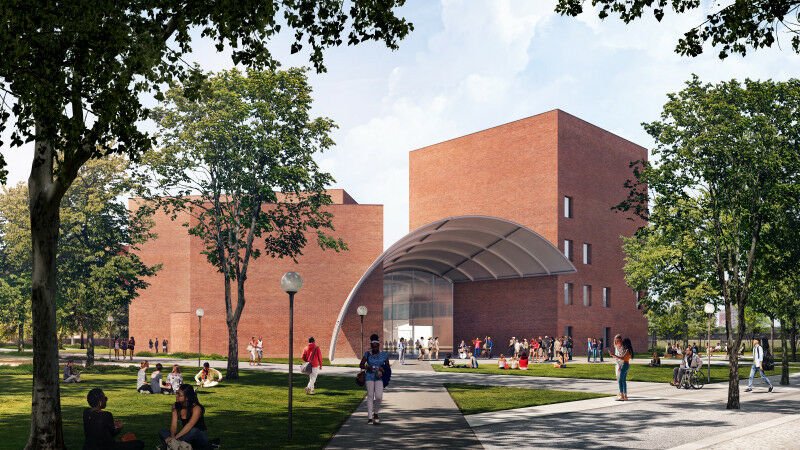
The new MIT Music Building, adjacent to Kresge Auditorium, will feature high-quality rehearsal and performance spaces, a professional-grade recording studio, classrooms, and laboratories for the music technology program. Credits : Image: Design Distill/SANAA
The new MIT Music Building, adjacent to Kresge Auditorium, will feature high-quality rehearsal and performance spaces, a professional-grade recording studio, classrooms, and laboratories for the music technology program. Credits : Image: Design Distill/SANAA Keeril Makan describes how a new facility, now under construction, features rehearsal and performance spaces, a recording studio, classrooms, and music technology laboratories. More than 1,500 students enroll in music classes each year at MIT. More than 500 student musicians participate in one of 30 on-campus ensembles. In spring 2025, to better provide for its thriving musical program, MIT will inaugurate its new music building, a 35,000-square-foot three-volume facility adjacent to Kresge Auditorium. The new building will feature high-quality rehearsal and performance spaces, a professional recording studio, classrooms, and laboratories for the music technology program. Keeril Makan is the Michael (1949) and Sonja Koerner Music Composition Professor, section head of the MIT Music and Theater Arts Section (MTA), and was recently named associate dean of the School of Humanities, Arts, and Social Sciences. A celebrated composer, Makan has been instrumental in the conception and realization of the MIT Music Building , which will also be known as Building W18. He speaks here about the ways that music helps MIT broaden and fulfill its mission, and the opportunities that the new facilities will provide. Q: After many years of planning, the MIT Music Building is taking shape. How will this new facility change the MIT experience?
TO READ THIS ARTICLE, CREATE YOUR ACCOUNT
And extend your reading, free of charge and with no commitment.