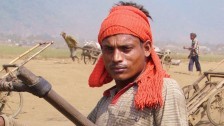
Coal labourers on the Bangladeshi side of Boropani. Credit: Delwar Hussain
As India sets about constructing a metal curtain along the full length of its border with Bangladesh, Cambridge anthropology graduate Delwar Hussain travelled to the remote village of Boropani, which straddles the frontier, to see how the lives of ordinary people are being affected by the tussle between Dhaka and its emerging superpower neighbour. He will be talking about his experiences, which also form the subject of a forthcoming book, in Cambridge this Thursday. As states and societies become further enmeshed, more walls, barricades and cordons seem to be going up, rather than coming down." - —Delwar Hussain In 2008, I travelled from my cosy lodgings in Cambridge to a remote and isolated coal-mining village, clustered between hills and wetlands on the Bangladesh-India border. The 2,500 mile boundary on which the village of Boropani is located is considered to be one of the most dangerous in the world. Every year, large numbers of people, most of them poor Bangladeshi farmers and traders, are shot at and killed by Indian border security guards. I had gone there to find out how such out of the way places are at the centre of some of the biggest discussions of the present day - on globalisation, development, neoliberalism, and the growth of new world superpowers. I wanted to write about the double-sided, barbed-wire security fence India is constructing along the full length of its border with Bangladesh - and in particular, how the fence will affect those who live and work on the margins of these countries.
TO READ THIS ARTICLE, CREATE YOUR ACCOUNT
And extend your reading, free of charge and with no commitment.