Thanks to the German Research Foundation’s funding of large-scale equipment, the University of Stuttgart has received a transmission electron microscope [Picture: Thermo-Fisher]
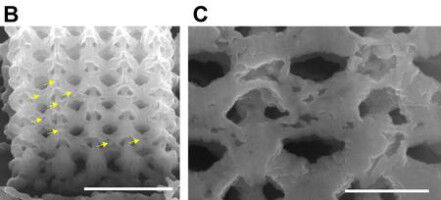
Thanks to the German Research Foundation's funding of large-scale equipment, the University of Stuttgart has received a transmission electron microscope [ Picture: Thermo-Fisher] - A new transmission electron microscope (TEM) at the University of Stuttgart that will be able to make visible tiny pores as small as 1 to 100 nanometers in size. The TEM Spectra-300 from the company Thermo Fisher is one of the most modern instruments worldwide for high-resolution examination of all kinds of materials. It is intended to advance the work of the Collaborative Research Center "Molecular Heterogeneous Catalysis in Confined Geometries" (SFB 1333), but also to be used in battery research and biology, for example. The SFB 1333 (spokesperson Prof. Michael Buchmeiser) aims to accelerate chemical reactions and to produce particular products as effectively and specifically as in nature. This is to be achieved by means of novel catalysts that use defined, directing cavities as a reaction environment. "With the microscope, we want to find out whether the systems were produced successfully, we want to test their function and investigate how to improve them further," says Prof. Guido Schmitz and Robert Lawitzki from the Institute for Materials Science, who will be operating the microscope at the University of Stuttgart. "Because the systems are only a few atoms in size and also very sensitive, a microscope with unique equipment is required to study them." The TEM allows the scientists to work with accelerating voltages in the range of 30 to 300 kilovolts, so that they can examine a wide range of specimens and achieve a very high resolution.
TO READ THIS ARTICLE, CREATE YOUR ACCOUNT
And extend your reading, free of charge and with no commitment.