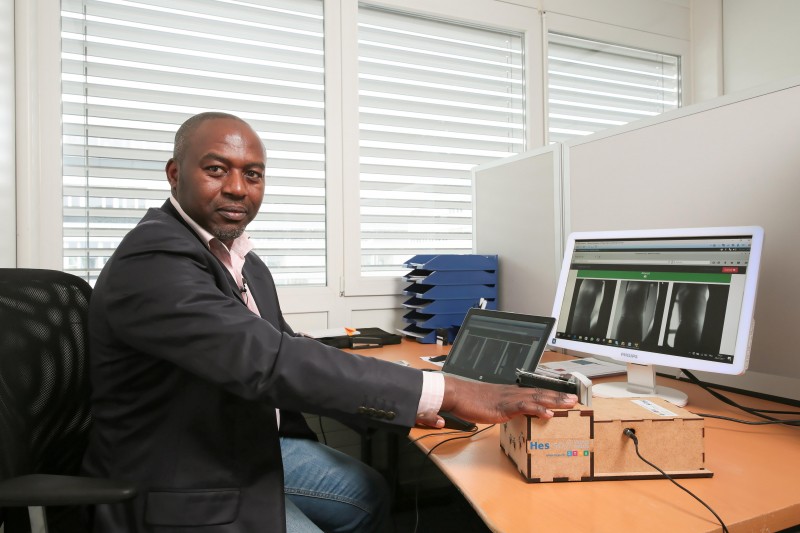
EPFL's Security and Cryptography Laboratory joined forces with startup Global ID to develop an encryption technique for processing biometric data captured via 3D finger vein recognition - a system that's next to impossible to counterfeit. It's too easy to fake fingerprints, and current biometric authentication systems are simply not secure enough. That is the view of EPFL researchers studying biometric identification through vein recognition - a system that could be particularly useful for hospitals, law enforcement and even banks. Now EPFL's Security and Cryptography Laboratory and the startup Global ID have developed an even more secure identification system that processes data more safely than current standards and that leverages 3D vein imaging technology developed by the Idiap Research Institute in Martigny, the University of Applied Sciences in Sion (HES-SO Valais-Wallis) and Global ID. Revolutionizing ID systems - "2D vein recognition technology is already used throughout the world, but the system has its flaws. With 3D analysis, the risk of counterfeits is essentially non-existent since we all have different veins," explains Lambert Sonna Momo , the founder of Global ID. The vein scanner identifies someone when they place their index finger on the sensor.
TO READ THIS ARTICLE, CREATE YOUR ACCOUNT
And extend your reading, free of charge and with no commitment.
Your Benefits
- Access to all content
- Receive newsmails for news and jobs
- Post ads