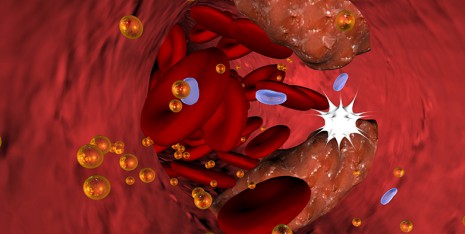
Atherosclerosis: Oxidative stress produces fatty acids, which cause inflammation. Intriguingly, ETH researchers found fatty acids tat inhibit inflammation.
ETH researchers have synthesised fatty acids in the laboratory that result from oxidative stress in the body. The laboratory variants turned out to be more potent anti-inflammatories than the natural ones, and have now been patented. It is a hotly debated, highly researched subject that has taken on the semblance of a religious war: what are good and what are bad fats? But research from ETH Professor Manfred Kopf's group published in recent years about fatty acids and their role in inflammatory diseases has turned certain dogmas upside down: the group found that certain oxidised fatty acids actually inhibit inflammation. Inflammatory - or not?. Previously, many scientists had assumed that oxidised fatty acids cause and promote inflammation. An example is the low-density lipoprotein (LDL), a delivery vehicle for cholesterol and fatty acids that every cell needs and takes from the blood. Excessive amounts of LDL cause atherosclerosis.
TO READ THIS ARTICLE, CREATE YOUR ACCOUNT
And extend your reading, free of charge and with no commitment.