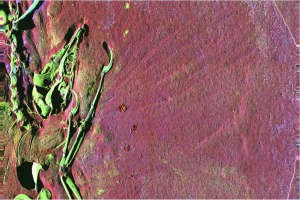
Pigments from ancient fossils are on show at the Exhibition
Stunning colours captured from 120 million year old fossils using cutting edge technology have gone on show. University of Manchester palaeontologists and geochemists are presenting their research at the Royal Society's annual Summer Science Exhibition. The exhibit, Palimpsests, Palaeontology and Particle Physics, features rare fossils including a 120 million year old bird and chemical images of prehistoric life extracted from the sands of time by using the most powerful light sources in the universe. The light source at the Stanford Synchrotron shines brighter than a million suns. The research is the closest scientists have come to putting a finger on the pulse of these amazing fossils, which includes birds, fish, dinosaurs and a host of other creatures more than 100 million years old. Visitors to the exhibition will be able to see these ground-breaking images produced by the Manchester team who have worked at the Stanford Synchrotron Radiation Lightsource in California. Visitors to the exhibit will get a chance to see how a synchrotron works, with a scale model of the device The exhibit, constructed by the Palaeontology Research Group at The University of Manchester, shows the results of a collision between particle physics and palaeontology by exploring what happens when scientists shed intense x-ray light on these very ancient fossil remains.
TO READ THIS ARTICLE, CREATE YOUR ACCOUNT
And extend your reading, free of charge and with no commitment.