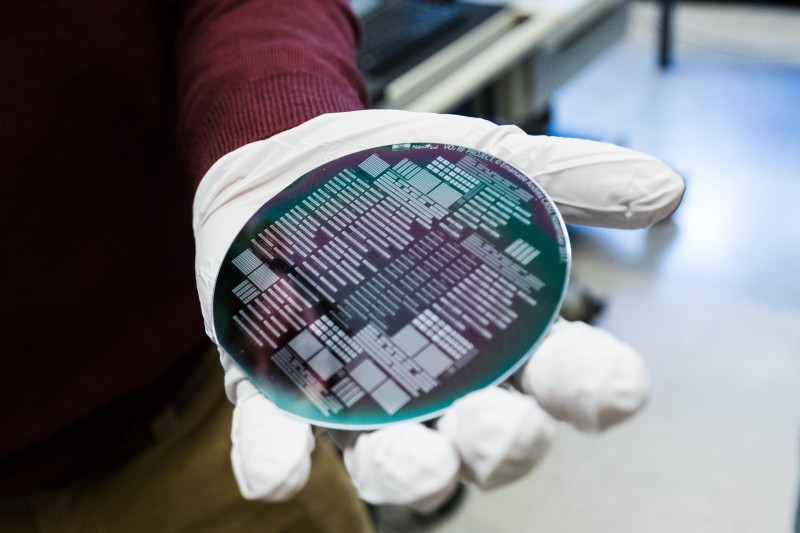
Vanadium dioxide's unique properties make it perfect for outperforming silicon and giving rise to a new generation of low-power electronic devices. Under the Phase Change Switch project ( https://phasechange-switch.org/ ), which is being funded by the EU's Horizon 2020 research program and coordinated by EPFL researchers, engineers have shown how this compound can be used to create programmable radiofrequency electronic functions for aerospace communication systems. Other applications - such as in neuromorphic computing and artificial intelligence - are also on the cards. First came the switch. Then the transistor. Now another innovation stands to revolutionize the way we control the flow of electrons through a circuit: vanadium dioxide (VO
2). A key characteristic of this compound is that it behaves as an insulator at room temperature but as a conductor at temperatures above 68°C.
TO READ THIS ARTICLE, CREATE YOUR ACCOUNT
And extend your reading, free of charge and with no commitment.
Your Benefits
- Access to all content
- Receive newsmails for news and jobs
- Post ads



