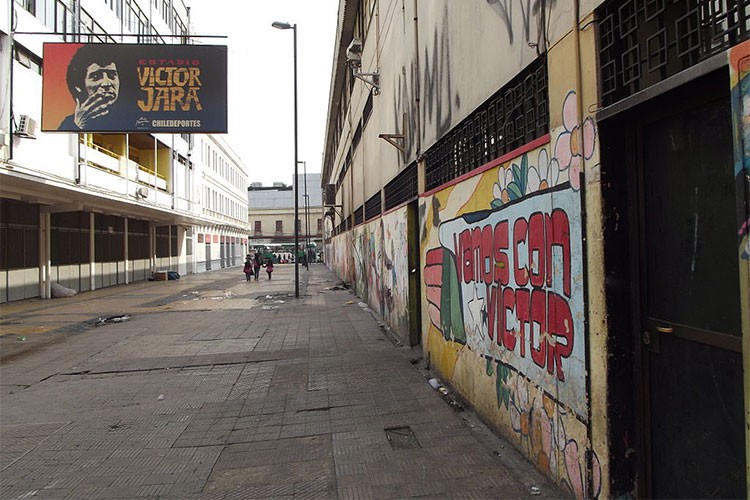
Chilean musician and activist Victor Jara is remembered decades after his murder during the Pinochet coup. (Wikimedia Commons photo by Jaime Soto Ceura)
The 2016 American presidential campaign presents a view of how music and politics mix to excite or appease voters - or provide a break from dull policy speeches. But this intersection of culture and pursuit of political power, which is played out globally in a multitude of formats, can also prove dangerous, even deadly. An upcoming event on the UC Berkeley campus stresses the extreme risks that can come with lending voice to a cause or opposing another one. UC Berkeley remembers Victor Jara Victor Jara, a 40-year-old folk singer/activist/university lecturer in Chile, had developed a loyal following for his poetic songs supporting social equality and the working class and the nueva canción traditions of south-central Chile's indigenous Mapuche people. But he also generated fear and hatred from the soldiers and generals backing Gen. Augusto Pinochet in his 1973 coup, which led to the disappearance and deaths of thousands, including Jara. Jara was taken into captivity, tortured, beaten and shot 44 times in Estadio Chile, a Santiago soccer stadium.
TO READ THIS ARTICLE, CREATE YOUR ACCOUNT
And extend your reading, free of charge and with no commitment.