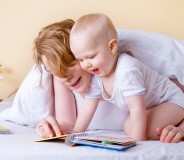
This research will help us promote language development with children’s centres and schools in Bristol. Positive communication right from babyhood is the key to good communication later on.
Children whose parents encourage early communication are better at talking by the age of two and fare better when they start school. Children whose parents encourage early communication are better at talking by the age of two and fare better when they start school. By encouraging reading, talking and playing, providing a range of books and toys, visiting a library, keeping TV time to a minimum and taking their child to preschool, parents can dramatically improve their child's language skills and readiness for school. Using data on 9,629 children in the Children of the 90s study (ALSPAC) at the University of Bristol, the research found that those children whose parents provided a rich 'communications environment' went on to achieve higher scores on tests of language, reading and maths when they entered school. In the early years, the communication environment was a better predictor of children's success with language than their social background. These findings emphasise that what parents do with their children, even before they have begun to talk and regardless of their social background, can help to prepare children for school. Professor Roulstone from the University of the West of England, who led the research, said: "These findings are an encouragement to all parents to provide a positive communication environment for their child from the very start of their lives.
TO READ THIS ARTICLE, CREATE YOUR ACCOUNT
And extend your reading, free of charge and with no commitment.