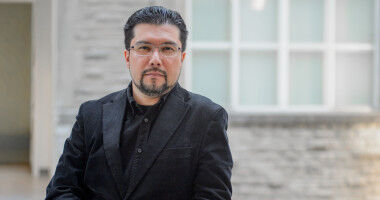
Almost half of those in employment prefer a combination of lump sum and pension when paying out their pension fund assets. The need for advice, particularly on the form of withdrawal, is high. Tax incentives shape the way people pay into the second and third pillars while they are working. This is shown by a new study by the Lucerne University of Applied Sciences and Arts.
For the fifth time, a study by Lucerne University of Applied Sciences and Arts (HSLU) is analyzing the financial and pension knowledge of Swiss employees. The focus topic of this year’s "VorsorgeDIALOG" is the preferred form of drawing retirement capital and the need for advice among the working population with regard to occupational pension options. In the representative survey, employees aged between 20 and 65 from all over Switzerland were questioned. The results therefore reflect the desired form of pension at retirement.
Combination most popular
In occupational pension plans, insured persons can withdraw their retirement assets as a one-off lump sum, as a monthly pension or as a combination of both. Just under half (47%) of respondents prefer a combination of lump sum and pension, making them the majority. Around 23% of respondents opted for a pure pension and only 13% for a full lump-sum withdrawal. For Yvonne Seiler Zimmermann, who conducted the study, this result is hardly surprising: "For many, the combination is a pragmatic solution that allows them to benefit from the advantages of both forms of withdrawal - the security of a regular pension on the one hand and the financial flexibility of a lump-sum withdrawal on the other." A considerable number of respondents (17%) were unable to answer the question about the form of withdrawal. According to the author of the study, this includes many young employees, for example, who are making provisions for their old age but are not yet concerned with questions relating to their actual retirement.
The type of pension depends in particular on socio-demographic factors: Women, older people and people without financial training are more likely to choose a pure pension, while men and people with a risk appetite tend to opt for a lump-sum withdrawal. People with financial training are more likely to choose a combination. In addition to the financial and family situation, personal life expectancy and the need for financial security are also decisive factors in the choice of withdrawal form. Tax considerations play a subordinate role in this decision. There is a difference along geographical lines between German-speaking Switzerland and Ticino: in Ticino, pure lump-sum withdrawals are more likely to be chosen, while in German-speaking Switzerland a combination is preferred.
Need for advice is high
"The correlation between the need for advice and the form of withdrawal is interesting," says Seiler Zimmermann. An overwhelming majority of respondents would like advice on retirement provision - in particular on the choice of pension form, voluntary purchases and staggered retirement. Those who find professional advice important are more likely to opt for a combination of capital and pension. By contrast, those who rely on informal sources such as family or friends or do not seek advice at all are more likely to opt for a full lump-sum withdrawal. People who rate their pension knowledge as poor, particularly with regard to the pension system or their understanding of their pension certificate, are more likely to prefer the pension solution.
Tax incentives have an effect
Having more retirement capital at retirement is the main reason for insured persons to make voluntary contributions to their pension plan. Tax incentives are also relevant: For 81 percent of men and 74 percent of women, tax advantages are a strong incentive for voluntary payments into pillar 3a. For voluntary purchases into the 2nd pillar, the proportion is even higher, at 86% for men and 81% for women.
Those who draw capital from their pension provision currently benefit from a lower tax rate than those with other income. There are currently discussions at federal level about restricting these tax advantages in order to ease the burden on the financial budget. A clear majority of respondents would continue to make voluntary contributions to the 2nd pillar or pillar 3a even without tax advantages. On the other hand, one in five people would refrain from paying into pillar 3a. In the case of voluntary purchases into the pension fund, it would even be one in four people. For the pension expert, it is therefore clear: "Tax motives have a not insignificant influence on voluntary pension provision."
Pension awareness remains low
Pension awareness is still modest this year, even if it has improved compared to 2024. "There are still many gaps in knowledge without insured persons being aware of this," says Seiler Zimmermann. "For example, many people are not aware that only employed people are allowed to pay into pillar 3a," continues the study author. Not knowing about such gaps in knowledge is particularly problematic: "Those who don’t know about their gaps in knowledge don’t inform themselves - and therefore make the wrong decisions when it comes to retirement provision," says the pension expert.
The results lead to the conclusion that increased efforts are also needed in the public debate in order to make insured persons more aware of the various topics relating to old-age provision. In particular, insured persons should realize that they can positively influence their pension situation by taking early and active action. Professional and independent advice can help people to make informed decisions and strengthen their financial security in old age - especially for people with a low level of pension knowledge.
PensionDIALOG 2025
Every year, the Institute of Financial Services Zug at Lucerne University of Applied Sciences and Arts examines the Swiss population’s current level of knowledge about finances and retirement provision. The analyses are based on a representative survey of 1,253 employed people aged between 20 and 65 throughout Switzerland.