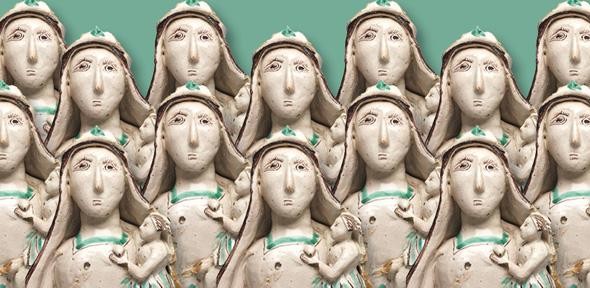
This down-to-earth, glazed terracotta figurine of the Virgin could act as the focus of family prayers in a modest home
Credit: Fitzwilliam Museum
Rustic figurines of a resigned-looking Virgin clutching her child may have no obvious literary or artistic merit to us today. But understanding what they meant to the spiritual lives of their owners can offer a glimpse of the human hopes and fears that people have, for centuries, invested in inanimate objects. The tight bond between the domestic and the devotional can be seen in the material culture of the period - in paintings, ceramics and more. These objects tell us how closely daily life intersected with religious belief. Mary Laven It's an enduring irony of history that the most commonplace objects from the past are those least represented in today's museum collections. The more precious and expensive an object, the more likely it is to have survived. As a result, our perceptions are skewed towards items that belonged to the rich and powerful - objects that were perhaps rarely handled.
TO READ THIS ARTICLE, CREATE YOUR ACCOUNT
And extend your reading, free of charge and with no commitment.