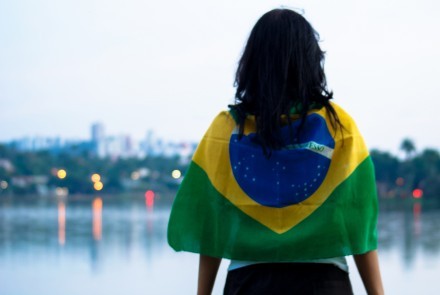
Photo by Hugo Martins Oliviera on flickr.
Around 100 million Brazilians head to the polls on Sunday 26 October as the world's fourth largest democracy decides on its next president. In the final round of voting, contenders are incumbent Dilma Rousseff of the centre-left Worker's Party (PT) and Aécio Neves, candidate for the centre-right Brazilian Social Democratic Party (PSDB). Brazil's emerging economy means it is an increasingly significant player on the world stage. However, the next government has significant problems to overcome, including domestic social and economic inequality, corruption and rising inflation. ANU experts have commented on the implications of the vote. Dr Sean W Burges - Deputy Director, Australian National Centre for Latin American Studies - ANU College of Arts and Social Sciences "The campaign has been the most ill-tempered in democratic Brazil's history with both candidates publicly and frequently accusing each other of outright lying and fabricating false charges of wrongdoings. Chief amongst the accusations has been that of corrupt use of public office.
TO READ THIS ARTICLE, CREATE YOUR ACCOUNT
And extend your reading, free of charge and with no commitment.