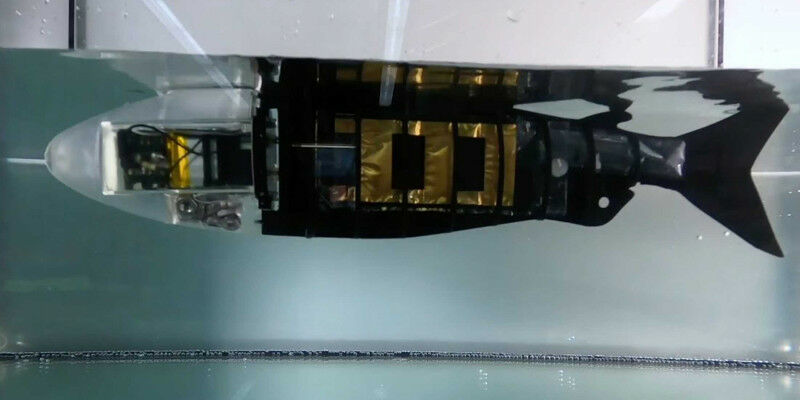
Artificial muscles in action under water. (Photograph: Screenshot from video by Gravert et al. Science 2024)
Artificial muscles in action under water. (Photograph: Screenshot from video by Gravert et al. Science 2024) Researchers at ETH Zurich have recently developed artificial muscles for robot motion. Their solution offers several advantages over previous technologies: it can be used wherever robots need to be soft rather than rigid or where they need more sensitivity when interacting with their environment. Many roboticists dream of building robots that are not just a combination of metal or other hard materials and motors but also softer and more adaptable. Soft robots could interact with their environment in a completely different way; for example, they could cushion impacts the way human limbs do, or grasp an object delicately. This would also offer benefits regarding energy consumption: robot motion today usually requires a lot of energy to maintain a position, whereas soft systems could store energy well, too.
TO READ THIS ARTICLE, CREATE YOUR ACCOUNT
And extend your reading, free of charge and with no commitment.