Provided
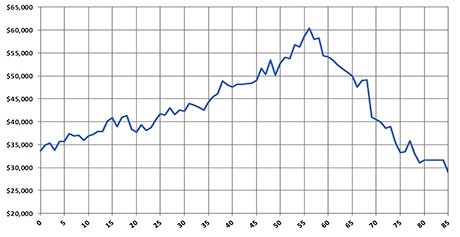
The median household income for Americans reached an all-time high in 2000, fell during the recession of 2001, and was only approaching its 2000 level in 2007 when the Great Recession struck. By 2011 it had fallen back to 1997 levels. Now, changes in demographics over the next two decades will make it even more difficult to raise the median, according to a Cornell economist. "The average American is increasingly going to be black, Hispanic and older. Unless [these demographic groups] earn considerably more than has been the case in previous decades, the average American's household income is likely to fall," said Richard Burkhauser, the Sarah Gibson Blanding Professor of Policy Analysis in the Department of Policy Analysis and Management in the College of Human Ecology. Without important changes in public policy, these forces will drive down median income by about 0.5 percent per year over the next two decades, according to an analysis by Burkhauser and Jeff Larrimore, Ph.D. '10, a former member of Burkhauser's research group now with the Joint Committee on Taxation of the U.S. Congress.
TO READ THIS ARTICLE, CREATE YOUR ACCOUNT
And extend your reading, free of charge and with no commitment.