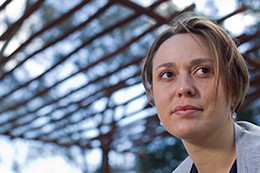
Sarah Bourke. Photo by Belinda Pratten.
Museums around the world are retaining the remains of Indigenous Australians against their communities' wishes. KATHARINE PIERCE reports. Imagine not being able to visit the grave of your loved one and pay your respects because their remains are tucked away in a museum thousands of kilometres away. Separated from their country and ancestors, the remains of some Indigenous Australians have been sitting in overseas museums for up to two centuries, their spirits in limbo, waiting to return to Australia before they can move into the afterlife. "At the time of European colonisation of Australia, Indigenous people were considered to be a dying breed," says Sarah Bourke, an honours student at ANU and an Aboriginal woman of Djaru, Ongkomi and Gamilaroi descent. "Their remains were considered to be very valuable by non-Indigenous people who were interested in advancing themselves in scientific circles. "In some cases I have read and heard about, the remains were taken illegally from places such as graveyards or hospital morgues.
TO READ THIS ARTICLE, CREATE YOUR ACCOUNT
And extend your reading, free of charge and with no commitment.