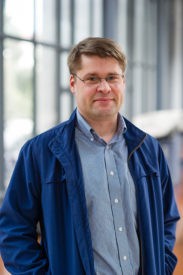
Yuriy Gorodnichenko
Yuriy Gorodnichenko wants you to know that he appreciates the irony of his paper on how political information spreads across Twitter becoming a victim of.. how political information spreads across Twitter. Gorodnichenko, a UC Berkeley economics professor, published a paper this month arguing that automated Twitter bots could have played a small but potentially influential role in the 2016 Brexit vote and 2016 U.S. presidential elections. "Given the narrow margins of victories in each vote, bots' effect was likely marginal but possibly large enough to affect the outcomes," Gorodnichenko wrote, along with his co-authors Tho Pham and Oleksandr Talavera from Swansea University in the U.K. The paper was picked up by Bloomberg on Monday, and from there it lit up Twitter. Users on the left pointed to the paper as proof that Russian-backed Twitter bots had elected Trump, while those on the right dismissed the paper entirely and journalists and some economists questioned the authors' claim that bots swayed the election. The #FakePresident was elected by fake Twitter bits, which "may explain 3.23 percentage points of the actual vote for Trump in the U.S. presidential race." https://t.co/qVdrrjFQcH - Derek Cressman (@DerekCressman) This is just MADDENING! I to this day, don't understand how our Intelligence agencies either #1 missed this completely #2 kept it from us #3 I don't know what they hell happened but this SUCKS!! https://t.co/eAai2Pk7ud FiredUpResistance #FBR - (@Vegas040805) - The problem?
TO READ THIS ARTICLE, CREATE YOUR ACCOUNT
And extend your reading, free of charge and with no commitment.