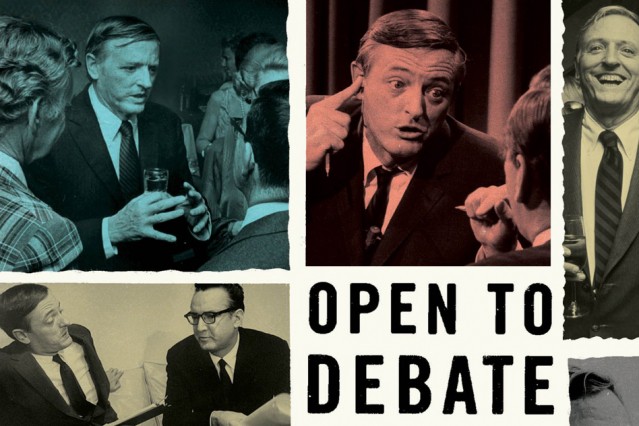
?Open to Debate: How William F. Buckley Put Liberal America on the Firing Line,? published by HarperCollins, and written by Heather Hendershot, of film and media in MIT’s Comparative Media Studies/Writing program.
In 1966, when the conservative writer William F. Buckley launched a television talk show, it may not have seemed like a promising endeavor, on the surface. The show, 'Firing Line,' was initially not broadcast on a television network but syndicated to local stations. Even in a lower-tech era, 'Firing Line' was low-tech: It simply showed Buckley against a bland backdrop, glass of water nearby, talking for an hour with guests. Yet 'Firing Line? did not just survive on the air for more than three decades; it thrived. Through Buckley, the show became a central platform for the effort of some conservatives to move the Republican Party to the right and, at the same time, bring intellectual respectability and credibility to the conservative movement. 'With 'Firing Line,' Buckley forged an appealing mainstream image of right-wing conservatism,' says Heather Hendershot, a professor of film and media in MIT's Comparative Media Studies/Writing program. Buckley, she adds, showed 'that conservatives could be urbane and sophisticated and intelligent, and they weren't just raving lunatics.' Hendershot has written a new book about the show, 'Open to Debate: How William F. Buckley Put Liberal America on the Firing Line,' released this week by HarperCollins publishers.
TO READ THIS ARTICLE, CREATE YOUR ACCOUNT
And extend your reading, free of charge and with no commitment.