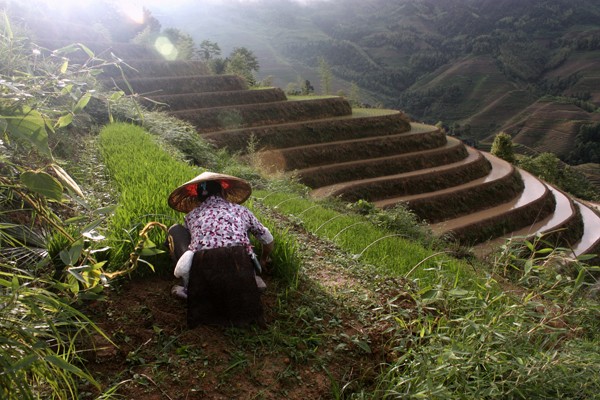
Rice farming is more lucrative than corn for Chinese farmers, but flooded paddies contribute to decreased water quality and quantity.
Rice farming near Beijing has contaminated and tapped the city's drinking water supply. For the past four years, China has been paying farmers to grow corn instead of rice, an effort that Stanford research shows is paying off for people and the environment. The brown, smog-filled skies that engulf Beijing have earned China a poor reputation for environmental stewardship. But despite China's dirty skies, a study led by Stanford environmental scientists has found that a government-run clean water program is providing substantial benefit to millions of people in the nation's capital. The Miyun reservoir, 100 miles north of Beijing, is the main water source for the city's more than 20 million inhabitants. Greater agricultural demands and a decline in precipitation, among other factors, have cut the reservoir's output by two-thirds since the 1960s. The water has also become increasingly polluted by fertilizer and sediment run-off, and poses a significant health risk.
TO READ THIS ARTICLE, CREATE YOUR ACCOUNT
And extend your reading, free of charge and with no commitment.