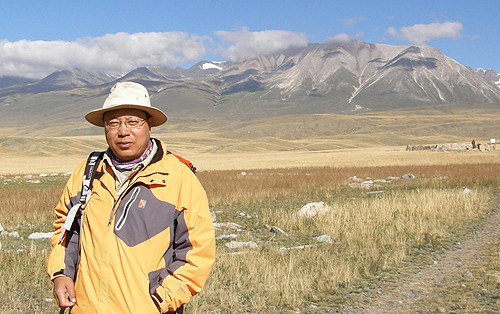
Dr Peter Jia in Xinjiang, north-west China.
The vast but little known north-western Chinese region of Xinjiang has presented a University of Sydney archaeologist with exciting new evidence of early between China and the West. The findings of the Chinese-Australian collaborative team will be presented at East and West: Past and Future , an upcoming archaeological workshop examining early ties between the West, Xinjiang and Central Asia. While on an expedition in Xinjiang's dry grasslands last year, Peter Jia found wheat starch dating back 4000 years, almost as old as the earliest wheat known in China. "This greatly strengthens the evidence that wheat came to China from the West," he says. "Our research is making significant advances in showing how ideas travelled across many miles of mountains and deserts to enrich early Chinese civilisation." Jia is co-organising East and West: Past and Future with the University's China Studies Centre so key specialists working in Xinjiang and neighbouring areas of Central Asia can share their ideas and knowledge across national boundaries. Participants will explore early interaction between China and her western margins, especially Central Asia and the Eurasian steppes. They will also discuss plans for heritage protection in these historically significant regions.
TO READ THIS ARTICLE, CREATE YOUR ACCOUNT
And extend your reading, free of charge and with no commitment.