Chinese food for thought
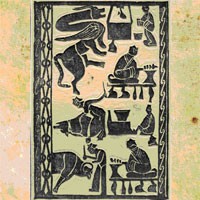
Chinese food contains a hidden recipe for living, a new analysis reveals. Writing in a book published this week, Cambridge academic Professor Roel Sterckx argues that the culinary arts supplied some of the key concepts and metaphors in Chinese philosophy and political thought over 2,000 years ago. Much of the symbolism that pervades Chinese food culture, he suggests, not only influenced the early Chinese but also survives in Chinese society today. Drawing on virtually the entire corpus of texts that were produced in China for 800 years after the 6th century BCE, Sterckx explores how a vibrant culinary culture was important for how the early Chinese explained the workings of the human senses. He discovered that one of the most recurrent portrayals of ministers, advisers, and those offering counsel to rulers and emperors is that they started their careers as cooks or butchers. "Cooking, eating, feeding, dining and banqueting were a much used craft analogy for good and moral government in traditional China," explained Sterckx, who is the Joseph Needham Professor of Chinese History, Science and Civilisation. "Cooks, butchers and stewards exemplified some of the worldly skills upon which the art of rulership was modelled." For instance, the ability to combine ingredients in equal proportion to ensure that no individual flavour overpowers the other symbolised the idea of harmony.
TO READ THIS ARTICLE, CREATE YOUR ACCOUNT
And extend your reading, free of charge and with no commitment.