The Archiepiscopal Clara Fey Gymnasium in Bonn-Bad Godesberg and the Department of Early Modern History and Rhenish Regional History at the Institute of History at the University of Bonn have signed a cooperation agreement.
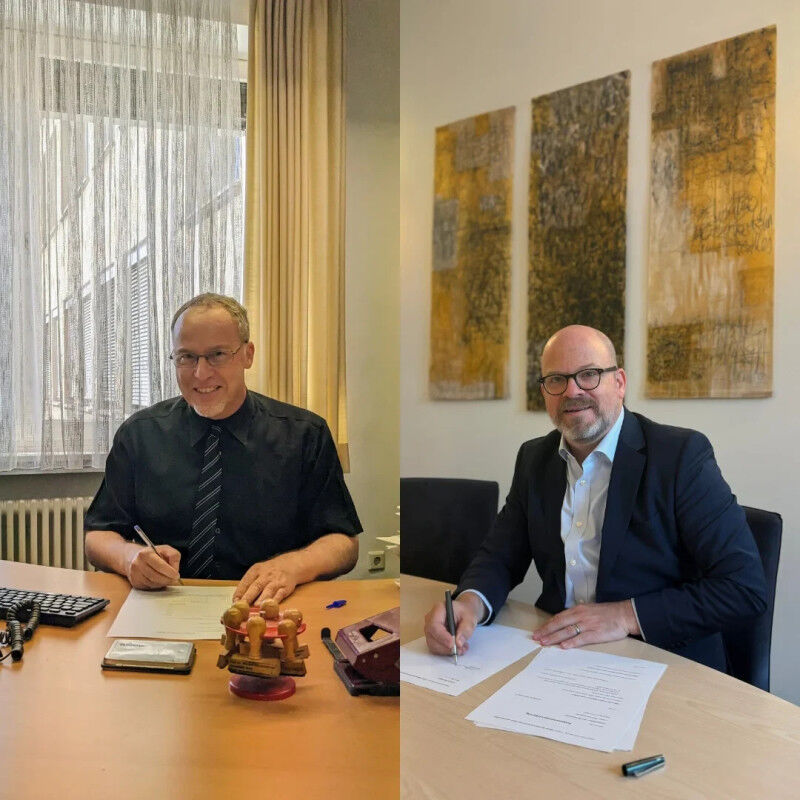
The agreement was signed by the head of the department, Michael Rohrschneider, and the school principal, Christoph Dahmen, on the occasion of the 5th anniversary of the "Datendonner" project, through which the university department familiarizes students-and now also high school students-with the wealth of research and source material available online."Datendonner" as a research resource Datendonner presents online resources that can be used for historical research via social media - in particular source editions and collections of materials. The resource is aimed at students, who can use it to discover topics and sources and deepen their skills in online research and media criticism.
The project has been running for five years. Now, thanks to the cooperation with Clara Fey Gymnasium, it is also open to high school students. The aim of the collaboration is to inspire them to take an interest in the subject beyond their history lessons and to promote critical thinking through source-based projects from the Institute’s collections.
Transition to university
In class, students will analyze sources and "understand them in their foreignness," using existing Datentoner articles as a guide. In line with the topics covered in the curriculum, the focus will be on medieval and early modern sources. However, other eras may also be included in the project.This cooperation also takes into account the possible transition to university. An in-depth examination of the sources is also advantageous with regard to the research projects that are required in upper secondary school.

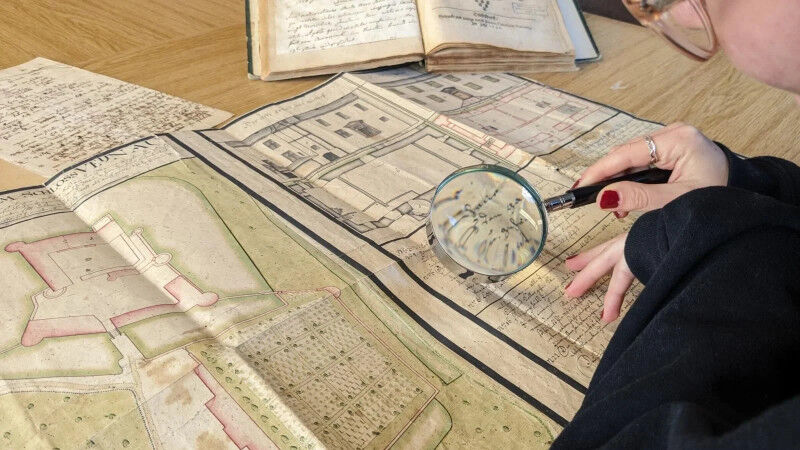
While sources are usually found in textbooks as ready-made excerpts, This encounter is then continued on site at the university and with original materials from medieval and early modern sources, for example in workshops. Excursions are also planned.
The school and university are looking forward to joint events, workshops, and many new minds interested in the subject of history.