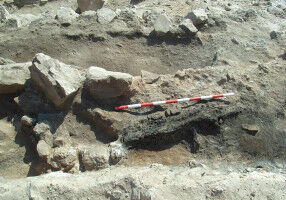
Columbia Archaeologist Unearths Remnants of 19th-Century Village Beneath Central Park
Columbia University archaeologist Nan Rothschild walks her dog in Central Park each morning, not far from where William G. Wilson used to live—more than 150 years ago. Rothschild has unearthed what is left of Wilson's home, as well as other remnants of Seneca Village, the first community of African American property owners in New York City. The village existed from the 1820s until 1857, when its inhabitants were evicted to make way for the creation of Central Park. "Seneca Village was autonomous," said Rothschild, director of museum studies at Columbia and research professor at Barnard College. "It had its own institutions, so its residents could live free from the everyday burdens of racism. It was a refuge. In a way, it was both in the city and out of the city—located about three miles from the densely settled portion of Manhattan." Seneca Village was located within New York's famous grid street system between 81st and 89th Streets and 7th and 8th Avenues, in what is now a portion of Central Park just east of Central Park West.