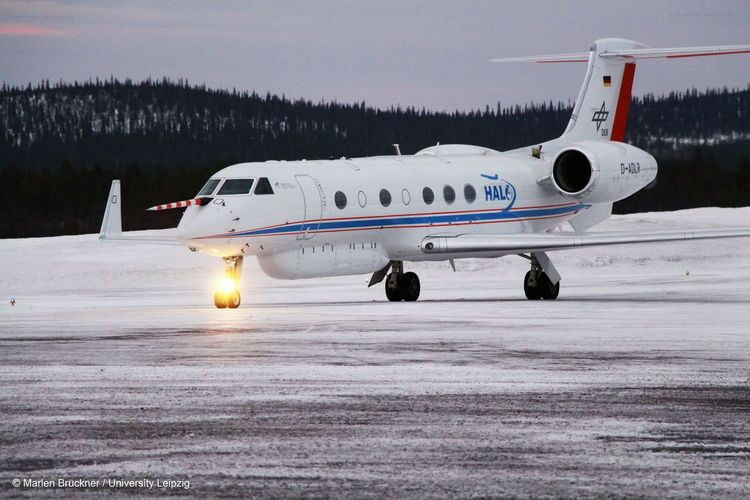
The HALO aircraft. Photo: Marlen Brückner/Universität Leipzig
The HALO aircraft. Photo: Marlen Brückner/Universität Leipzig - The High Altitude and Long Range Research Aircraft, or HALO, has been making unparalleled contributions to Earth system research for over a decade. Not only that, but with its global measurement campaigns, the high-altitude research aircraft is a symbol of international scientific cooperation on key issues relating to atmospheric processes and their global impact on the climate. Under the leadership of meteorologist Professor Manfred Wendisch, Leipzig University has now secured 4.6 million euros from the German Research Foundation (DFG) to expand the technical instrumentation of this high-flyer. The HALO aircraft is designed to reach high altitudes and carry out complex measurements in the atmosphere. With its state-of-the-art sensor technology, it is a major contributor to research into global environmental issues. Leipzig's development of the instrumentation is part of a broader DFG initiative to significantly increase HALO's scientific payload.
TO READ THIS ARTICLE, CREATE YOUR ACCOUNT
And extend your reading, free of charge and with no commitment.