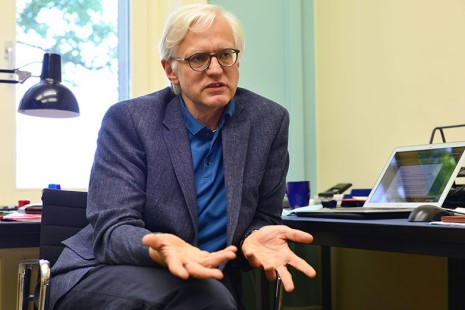
The philosopher Michael Hampe needs a change of scenery to be able to think and write in peace. (Image: Peter Rüegg / ETH Zurich)
Travel and happiness have a complicated relationship - even the Stoics were aware of this. An interview with philosopher Michael Hampe on the opportunities and risks that come with travelling. Mr Hampe, travel has never been more popular - millions of Europeans will travel abroad again this summer to lie on the beach, climb breathtaking mountains, or explore cathedrals and museums in foreign cities. How has the art of travel and what people hope to get out of it changed over time? People travel for many different reasons. Educational travel, as was popular in the early modern period, is still prevalent today - an entire industry has been built on natural historical and cultural travel. The industrialisation of holidays has increasingly turned travel to remote, exotic locations into a mark of social prestige. People talk about where they've been on holiday, and this leads to competition - for example, who's been to Fiji and how many times. Educational travellers also tended to come from affluent families. Has travel always been associated with prestige? Yes, but holidays and travel only became popular with the emergence of the working society. Our perception of work as the normal condition with a shortage of leisure time is characteristic of our society. In Latin, for example, work is described as negotium , which translates as "non-leisure". In a slave society, leisure was the normal condition. Political, artistic or scientific activities were not considered work. Today, the relationship between leisure and work is the opposite. Nowadays, not even wealthy people would say they don't work - otherwise they would be deemed unemployed. Why have holidays become popular in this working society?
TO READ THIS ARTICLE, CREATE YOUR ACCOUNT
And extend your reading, free of charge and with no commitment.