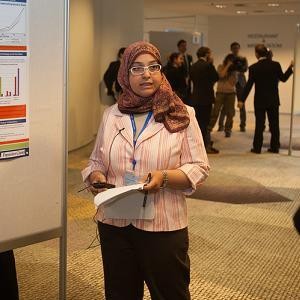
Health and Education fair in Egypt (credit: UNU-WIDER, source Flickr)
Obesity levels among women in lowand middle-income countries tend to rise in line with wealth as they purchase more energy-dense foods, but a new UCL study suggests that more educated consumers make better food choices that mitigate this effect. The study showed that in middle-income countries, obesity levels among women with secondary or higher education are 14-19% lower than less-educated women of similar wealth. The research, published in PLOS ONE, looked at the relationships between obesity, education and wealth in over 250,000 people across four middle-income and three low-income countries between 2005 and 2010. More educated people are typically wealthier, and this study was the first to isolate the effects of education and wealth to unpick their distinct effects. Each household's "wealth index" was measured by evaluating their possessions, housing situation and access to basic amenities. Based on these criteria, they were divided into five wealth brackets on a scale of 1-5, from richest to poorest, in each country. The middle-income countries examined were Egypt, Jordan, Peru and Colombia.
TO READ THIS ARTICLE, CREATE YOUR ACCOUNT
And extend your reading, free of charge and with no commitment.