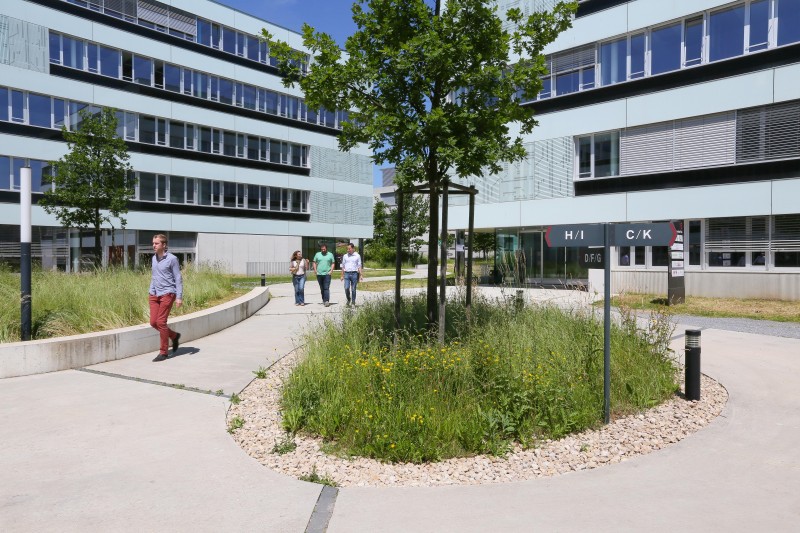
 A lot of EPFL spin off are located at EPFL Innovation Park© 2017 Alain Herzog
A recent report by EPFL's Vice Presidency for Innovation (VPI) shows just how effective the school's startup ecosystem is by looking at standard benchmarks such as the number of jobs created, funds raised, and the buyout rate for campus startups. Moreover, successful spin-offs invest in - and even buy out - nascent ones, contributing to the efficiency of this ecosystem hub. Fast growth is both the goal and common denominator of spin-offs, and the success of a given startup ecosystem is measured through the number of jobs these companies create, the amount of funds they raise and the prices they fetch when taken over. EPFL's Vice Presidency for Innovation compiled these indicators for EPFL spin-offs in a recent report, which reveals a sharp rise in the number and size of these companies and highlights how some successful startups serve as a model for others. Startups employ 5'6% of the workforce According to a recently released study by the Federal Council, the proportion of high-growth enterprises in Switzerland is one of the largest in the world. This is particularly true in the Lake Geneva region, where startups employ 5'6% of the labor force. In the past three years alone, more than 60 spin-offs have been formed in health care, IT and hardware (e.g., robotics, sensors and energy), in near equal numbers across the three fields.
TO READ THIS ARTICLE, CREATE YOUR ACCOUNT
And extend your reading, free of charge and with no commitment.
Your Benefits
- Access to all content
- Receive newsmails for news and jobs
- Post ads