


Acquiring information on rental apartments in Toronto is notoriously difficult, but researchers from the University of Waterloo are the first in Canada to prove that financial landlords are behind rising rents. They also discovered that they increase rents more sharply in neighbourhoods predominantly housing low-income and racialized people.
The findings show that this shift in ownership and the use of housing as an investment result in declining affordability. While the data in this study focuses on Toronto, the large corporations involved operate nationally.
"Most people can’t afford the housing they are living in, and these firms are in part responsible for pushing that change," said Dr. Martine August, a professor of planning in the Faculty of Environment at Waterloo. "They are buying up buildings and turning them into investment products, raising the rents and making communities less affordable for people."
Until now, no one had been able to prove that housing financialization was driving up rents. The researchers developed a unique dataset combining data from a range of sources to examine rents in Toronto by property,Ölandlord and landlord type.
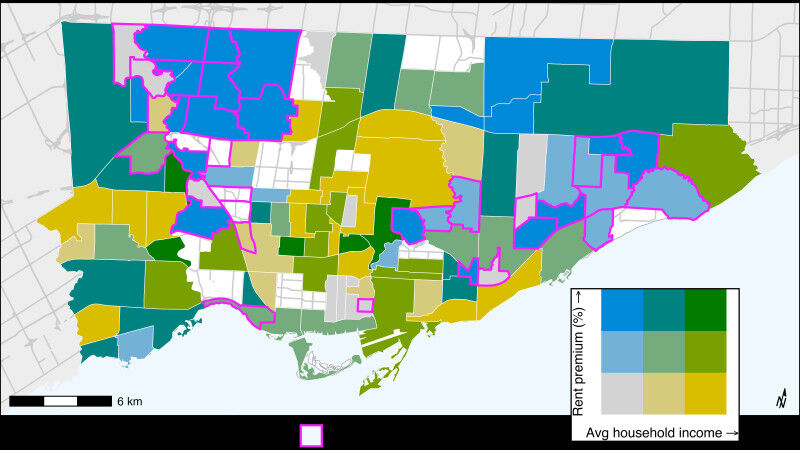
The researchers say their findings support policy recommendations from community groups to rein in financial firms. The solutions, they say, involve regulating rental housing, expanding tenant protections, and building more social housing - efforts that will support tenants and housing equality regardless of landlord type.
"The government has goals to improve housing affordability, but their programs give funding to organizations who eviscerate housing affordability," August said. "We don’t think that they should be accessing support from the Canada Mortgage and Housing Corporation or Canada’s National Housing Strategy."
The study, Financialization, housing rents, and affordability in Toronto , appears in Environment and Planning: Economy and Space.
(Photo credit for banner image: Blacqbook/Getty Images)