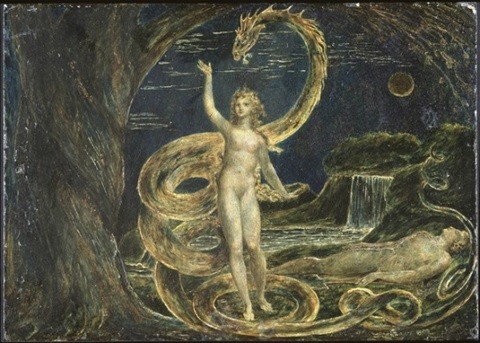
Eve reaches for the forbidden fruit in William Blake’s Eve Tempted by the Serpent. (Image: blakearchive.org)
UAlberta study revisits Milton's 17th-century epic to inform present-day debate on women's reproductive rights. For centuries, theologians and philosophers have been preoccupied with understanding why, despite all our social and technological progress, we can't escape the experience of human suffering. The Catholic Church insisted that Adam and Eve disobeyed God, who then threw the couple out of heaven with a curse that humankind, particularly Eve, would know pain and death until a child yet unborn, God's son, redeems humanity. But some have questioned the Biblical account's authority, and John Milton was one of them. In his epic poem Paradise Lost, the 17th-century British Puritan author and revolutionary rejects the Catholic Church's misogynist justification for pain and suffering, two University of Alberta researchers say. In their study, "Eve's Labours: Procreation, Reproduction, and the Politics of Generation in Paradise Lost," English and film studies professor Corrinne Harol and graduate student Jessica MacQueen examined Milton's representation of Eve in light of 17th-century scientific ideas about reproduction. The duo say this research may help inform present debates on female reproductive choice—and remove the blame on Eve for humankind's pain and suffering because of sin.
TO READ THIS ARTICLE, CREATE YOUR ACCOUNT
And extend your reading, free of charge and with no commitment.