It’s 4am, and the sound of my alarm blasts through the room. With heavy eyes, I turn it off and let myself gradually come into consciousness. I walk to the bathroom and splash cold water on my face. Now I’m really awake.
Why wake up at 4am, you ask? Well, it’s Ramadan-the holiest and most blessed month of the year for Muslims worldwide. It’s a time of reflection, prayer and fasting from dawn till dusk. Right now, I’m preparing for suhoor, the pre-dawn meal that sustains us for the long day ahead.
Back home in Indonesia, my mother would wake me up by knocking on my door, calling me to join the family for suhoor. We’d eat together while watching suhoor shows on TV, groggily but happily. As much as I miss those moments, I’m just as grateful to share my suhoor here in London with my four flat mates. There’s something uniting about gathering in the early hours with our bed hair and sleepy faces, cooking or reheating leftovers together. The food may not always match the flavors of home, but the 4am shared laughter and life updates more than make up for it.
After finishing our suhoor, we retreat to our rooms to prepare for Fajr, the first prayer of the day. It marks the beginning of our fast, a reminder of our spiritual commitment. In the stillness of the early morning, with the world outside yet to fully wake up, I lay out my prayer mat and begin my prayer, focusing on the connection between myself and God. The quiet makes it easier to reflect, express gratitude, and seek guidance. I also take this time to read a few pages of the Quran. Because Ramadan is more than just fasting-it’s a chance for a spiritual reset and an opportunity to strengthen my relationship with God. My goal this year is simple: to read more Quran than I did last year.
Later in the morning, my day continues with pre-lecture reading and assignments. After completing Dhuhr, the midday prayer, I make my way to campus for my afternoon lecture. This falls during what I call the "critical time" of fasting-when hunger and fatigue start to creep in. By this point, the energy I gained from suhoor begins to fade, replaced by a growing sluggishness that makes even the simplest tasks feel more difficult. Concentration wavers, and my body instinctively longs for rest.
Back home, we have a word for this waiting period before Iftar--’Ngabuburit.’ It’s a time when people pass the final hours before breaking their fast by visiting Ramadan markets or gathering with friends. Here, as a student, my ’Ngabuburit’ looks a little different. Three-hour lectures and coursework fill the time instead. To stay engaged (and to mask my growling stomach), I push myself to participate in class discussions. It’s a challenge to articulate thoughts clearly when my mind feels clouded by exhaustion, but speaking up keeps me mentally present. Moments like these make me realise the strength I have when I’m able to push through fatigue. After class, I head to the Student Centre, where the UCL Islamic Society (ISOC) holds a wonderful Iftar gathering every evening. The final moments before sunset are always filled with anticipation. We gather in the prayer space, the clock ticking down as we busy ourselves in conversation, dzikir, or quietly reciting the Quran. At the moment of Maghrib, we break our fast with dates and water, and there’s an indescribable joy in that first sip after a long day of fasting, surrounded by people who understand the experience. We then perform the Maghrib prayer together before heading to the South Quad to share a meal. The atmosphere is warm and welcoming, with volunteers making sure everyone has enough food. This shared experience of people from different parts of the world coming together after a long day of fasting is what makes Iftar at UCL so special. Mariam (Audiology BSc) puts it perfectly: "Experiencing Ramadan with friends (and, as a first year, a completely new circle) has made all the difference. The ISOC Iftars have made this Ramadan more special and it’s been a perfect opportunity to connect with others who are also celebrating Ramadan. Just having friends going through the same thing makes everything a lot easier."
One of Mariam’s favourite experiences has been how she and her coursemates transformed a quiet prayer room in their building. "Our building is slightly isolated from the rest of UCL, and because of that, we don’t see any other students except the 19 of us who do the same course. Decorating the little prayer room together has made the space feel more festive and welcoming and has increased the sense of community we feel despite being so isolated from all’other students," Mariam shares. "We also set up a dua jar, where people write down their duas (personal prayers or supplications), and whoever reads one can make dua for them. It’s been my favorite part of our mornings to go and read any new duas left in the jar from other students. We also put up a Ramadan calendar with daily challenges for everyone in the building, which has been a fun way to keep the spirit of Ramadan going."
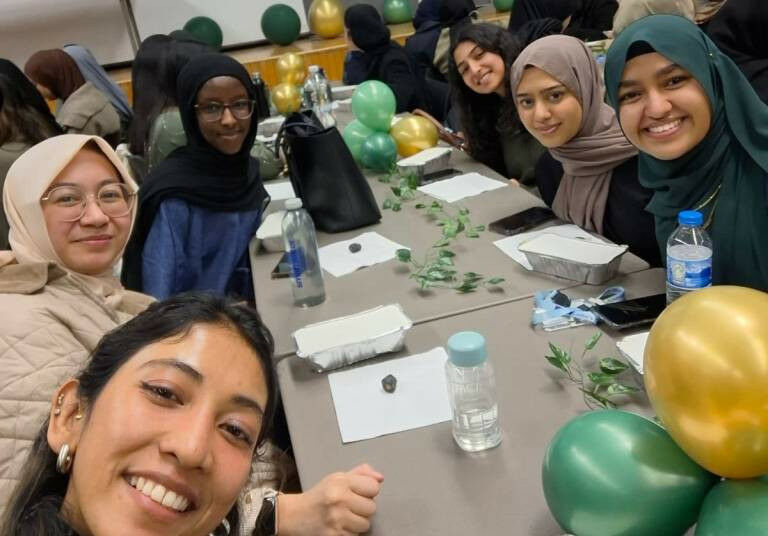
This spirit of Ramadan was especially strong during the Iftar event on the 7 March, where over 100 Muslims gathered in Jeffery Hall at Ioe. The communal spirit extended beyond the delicious feast. It was in the shared effort of setting up tables, serving food, and cleaning up afterwards. But the day wasn’t over yet. The evening continued with Isha, the night prayer, and for many of us, Taraweeh-a special Ramadan prayer performed only during this month. By the time the prayers conclude, exhaustion begins to set in, but so does a quiet sense of fulfillment. The night is short, and before I know it, it’ll be time for suhoor again. I make my way home, mentally preparing for another day of fasting, studies, and prayer.
Coming from a Muslim country, I was worried that I wouldn’t get to experience the same Ramadan month atmosphere here. But to my surprise, the sense of community and spirituality at UCL has made the experience just as meaningful. Whether it’s sharing suhoor with my flatmates, breaking fast with friends at ISOC’s Iftar gatherings, or standing shoulderto- shoulder in prayer, I’ve found that the Ramadan spirit transcends borders-it lives in the discipline it teaches, the connections it strengthens, and the spiritual renewal it brings.
Watch more experiences of A Day in the Life during Ramadan.
About Student Content Writer Vivian Almira Andhitya: Vivian is an MA Candidate in Education (Psychology) at UCL. This is her first article for UCL Student News.
- University College London, Gower Street, London, WC1E 6BT (0) 20 7679 2000