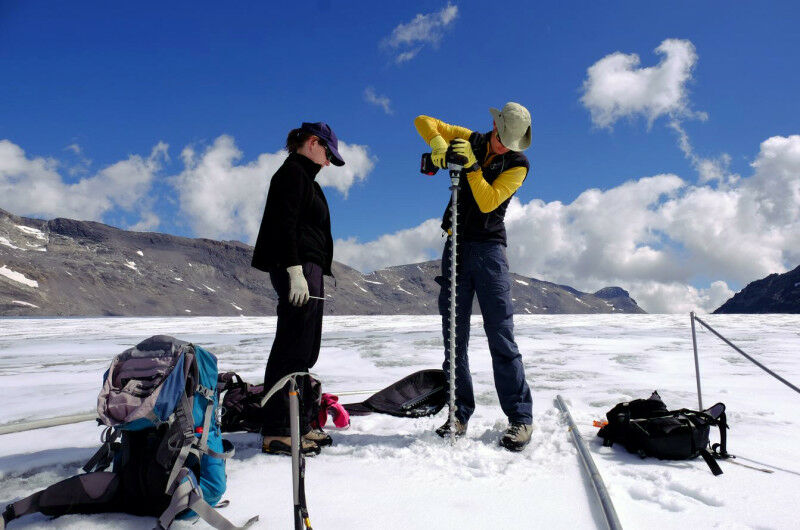
Matthias Huss bohrt eine Messstange zur Bestimmung der Schmelze nach. Die Daten helfen den Massenverlust der Gletscher besser zu dokumentieren und zu verstehen. (Bild: Clara Streule)
Matthias Huss bohrt eine Messstange zur Bestimmung der Schmelze nach. Die Daten helfen den Massenverlust der Gletscher besser zu dokumentieren und zu verstehen. (Bild: Clara Streule) Climate change caused by human activity under a high-emissions scenario may halve the area covered by glaciers outside the Antarctic and Greenland ice sheets by the end of the century, reports a study. This retreat could create novel ecosystems covering an area between the size of Nepal and Finland by the year 2100. Understanding these post-glacial ecosystems creates a new focus for researchers that sits alongside continued efforts to mitigate further glacial decline. One of the consequences of human-caused climate change is the shrinkage of glaciers, which causes a rapid ecological shift as novel ecosystems develop to fill emerging new habitat. However, analyses of this change at a global scale are lacking.
TO READ THIS ARTICLE, CREATE YOUR ACCOUNT
And extend your reading, free of charge and with no commitment.