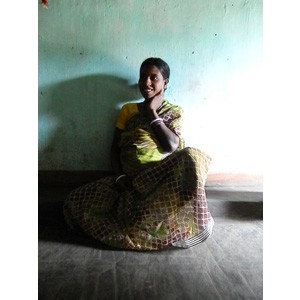
Knowing your
options in Jharkhand, India
Women's groups can dramatically reduce the number of maternal and newborn deaths in some of the world's poorest communities, according to a new meta-analysis published in The Lancet . The research incorporated seven trials in Bangladesh, India, Malawi and Nepal and looked at 119,428 births. It assessed whether groups facilitated by local women, who received a short training course of around 7 - 11 days, but were not health workers, affected rates of maternal and newborn mortality. The groups use a range of methods - including discussion, voting and role-playing - to identify common pregnancy-related health problems and work out locally appropriate ways to address them. Overall, in areas where groups were established, maternal deaths in the population as a whole fell by 37 per cent, and newborn deaths fell by 23 per cent. The reductions in maternal and newborn deaths were even more dramatic in areas where more than a third of women took part in the groups, with maternal deaths falling by 55 per cent, and newborn deaths falling by 33 per cent in these areas. The research, which was led by Professor Anthony Costello and Dr Audrey Prost of the UCL Institute for Global Health, points out that the groups are cost-effective, sustainable, and may be one of the most powerful ways to reduce maternal and newborn deaths in areas where other interventions are impractical or unaffordable.
TO READ THIS ARTICLE, CREATE YOUR ACCOUNT
And extend your reading, free of charge and with no commitment.