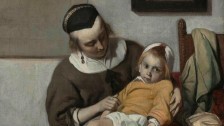
"The Sick Child" Credit: Collection of the Rijksmuseum, Amsterdam.
A new study into the grim and frequently heart-breaking history of childhood sickness and death has opened a window on to a surprisingly tender world of close families and devoted parenting in early modern England. Parents had a deep-seated desire to look after their offspring. Faced with the desperate reality of a child falling ill, the niceties of gender or manly behaviour perhaps ceased to matter." - —Hannah Newton Life for children during the Tudor and Stuart age has often been depicted as a pretty miserable experience, characterised by disease, physical hardship, and aloof and strict parenting. But Hannah Newton's book, The Sick Child in Early Modern England, 1580 - 1720 , adds to an emerging view among historians that society at this time was not as unforgiving as we sometimes think. Her investigation into the little-studied subject of how families responded to children falling ill and dying uncovers evidence for close familial ties, openly emotional fathers, and even the beginnings of specialist children's care among medical practitioners. Drawing on sources like doctors' casebooks, and the letters and diaries of parents, it also brings to life often heart-rending stories about parents who had to sit helplessly at their child's bedside, and of children who tried to keep their parents' spirits up even as they struggled for breath. Newton chose her sombre topic because it provides an unusual level of insight into what life was like at the time, especially for children.
TO READ THIS ARTICLE, CREATE YOUR ACCOUNT
And extend your reading, free of charge and with no commitment.