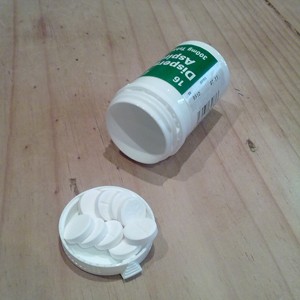
Soluble aspirin by sk8geek on flickr
Researchers have called for salt content in medicines to be labelled in the same way as food products in order to limit the risk of cardiovascular events, after research highlighted high salt levels in common medicines. The research shows that that taking the maximum daily dose of some medicines would exceed the recommended daily limits for sodium, without any additional dietary intake. Millions of patients taking effervescent, dispersible and soluble medicines containing sodium are at greater risk of cardiovascular events compared with patients taking non-effervescent, dispersible and soluble versions of the same drugs. The study, published today in the BMJ , is a joint project between the University of Dundee and UCL. The team compared the risk of cardiovascular events (non-fatal heart attack, non-fatal stoke, or vascular death) in patients taking sodium-containing effervescent, dispersible and soluble medications with those taking non-sodium versions of the same drugs between 1987 and 2010. Dr Li Wei (UCL School of Pharmacy), senior author of the paper said, "People who are taking medicines containing salt such as soluble paracetamol need to be aware of the cardiovascular risk. The study conducted using the UK primary care database demonstrates that large medical databases are a rich resource for eHealth research and can be used to address important public health issues." - People who are taking medicines containing salt such as soluble paracetamol need to be aware of the cardiovascular risk.
TO READ THIS ARTICLE, CREATE YOUR ACCOUNT
And extend your reading, free of charge and with no commitment.