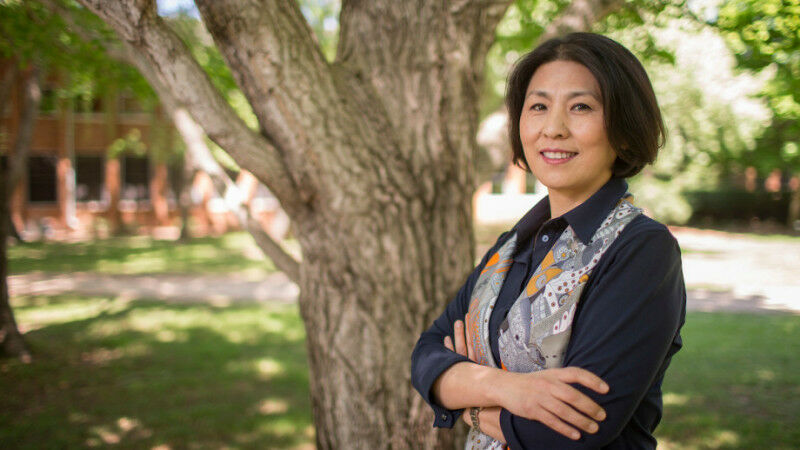
Distinguished Professor Xuemei Bai. Photo: ANU
Distinguished Professor Xuemei Bai. Photo: ANU - What businesses and cities must do to stay within 'safe and just' environmental limits for carbon, water, nutrients, land and other natural resources is the subject of a new set of recommendations from Earth Commission experts, including Distinguished Professor Xuemei Bai from ANU. The authors, from ANU, Technical University of Denmark, University of Exeter Business School, Scientific and Technological Research Council of Turkey, University of Graz, University of Potsdam and Potsdam Institute for Climate Impact Research (PIK), have published key knowledge gaps for researchers to help cities and businesses to operate within Earth system limits in the journal Nature. This comes ahead of an Earth Commission report due out next year that will outline a range of 'Earth system boundaries' (ESBs) based on the latest science, modelling and literature assessments. A decade ago, scientists defined a set of planetary boundaries within which humanity can operate 'safely' in nine areas - climate change, the biosphere, nutrients, water, land use, ocean acidification, ozone depletion, aerosols and novel entities - and the soon-to-be-defined ESBs will add a social justice dimension, to ensure quantified boundaries are 'just' as well as 'safe'. The researchers argue that methods need to be developed to identify what cities and companies must do for the world to stay within the ESBs and to help them assess their share of responsibility towards global budgets of carbon, water, nutrients, land and other natural resources, and set targets to protect them.
TO READ THIS ARTICLE, CREATE YOUR ACCOUNT
And extend your reading, free of charge and with no commitment.