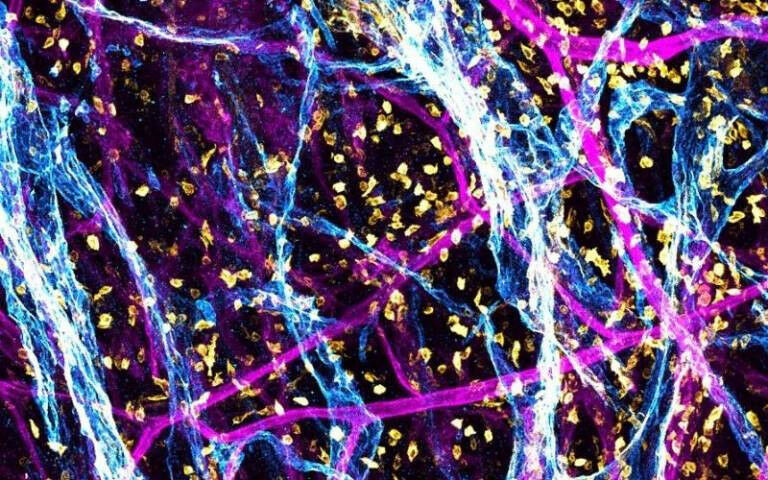
Winning GOSH image - A 3D snapshot of the hidden highways in childhood kidney cancer by Dr Daniyal Jafree, Aleksandra Letunovska, Reem Al-Saadi, Dr Dale Moulding (UCL Great Ormond Street Institute of Child Health), Radu Polschi (UCL Medical School), Dr Tanzina Choudhury, Dr Ciaran Hutchinson and Miss Naima Smeulders (GOSH).
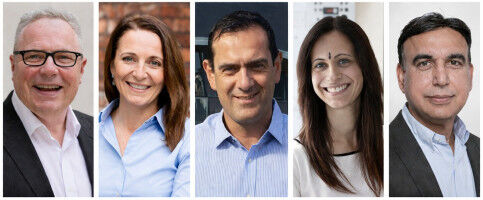
Winning GOSH image - A 3D snapshot of the hidden highways in childhood kidney cancer by Dr Daniyal Jafree, Aleksandra Letunovska, Reem Al-Saadi, Dr Dale Moulding (UCL Great Ormond Street Institute of Child Health), Radu Polschi (UCL Medical School), Dr Tanzina Choudhury, Dr Ciaran Hutchinson and Miss Naima Smeulders (GOSH) . Images that highlight UCL research have been showcased in an image competition run by Great Ormond Street Hospital for Children (GOSH). Researchers from UCL Great Ormond Street Institute of Child Health, UCL Medical School and GOSH were named the winners of the annual research and innovation image competition - named 'A Moment of Discovery'. The winning image, titled 'A 3D snapshot of the hidden highways in childhood kidney cancer', is a 3D microscope image of a stained kidney tumour removed after surgery at GOSH. The image show the tumour lymphatic network (coloured blue) that is responsible for draining waste and cells, amongst blood vessels (in magenta) and immune cells (in yellow). The team who submitted the image includes Dr Daniyal Jafree, Aleksandra Letunovska, Reem Al-Saadi, Dr Dale Moulding (UCL Great Ormond Street Institute of Child Health), Radu Polschi (UCL Medical School), Dr Tanzina Choudhury, Dr Ciaran Hutchinson and Miss Naima Smeulders (GOSH). The research, which is led by Professor David Long and Professor Kathy Pritchard-Jones (both UCL Great Ormond Street Institute of Child Health), focuses on how cancers grow and spread through these vessel networks, with the hope of understanding whether the size of the network can predict how well children respond to chemotherapy, or if these highways influence the likelihood of the cancer spreading.
TO READ THIS ARTICLE, CREATE YOUR ACCOUNT
And extend your reading, free of charge and with no commitment.