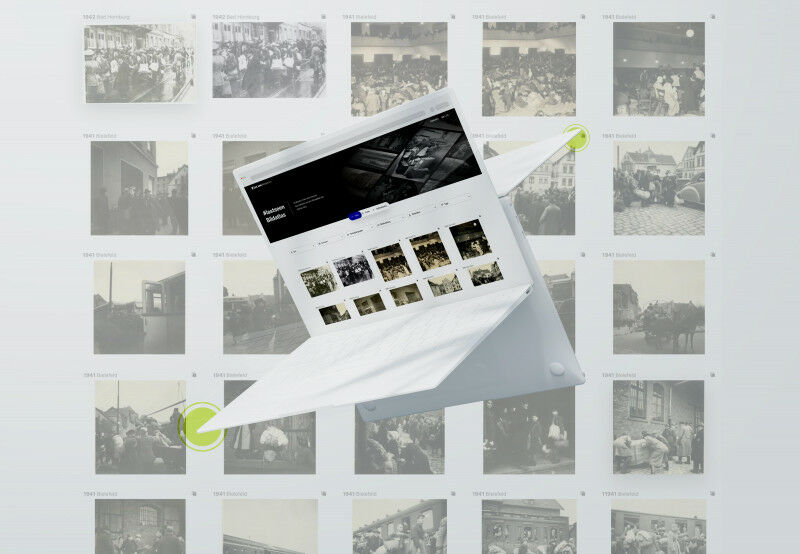
The ’#LastSeen’ Image Atlas Image Credit: ’#LastSeen’ project / &Why
Fundamental research on the history of National Socialism is being carried out in the "#LastSeen" project / Second funding phase has now begun. The '#LastSeen' Image Atlas Image Credit: '#LastSeen' project / &Why An international research project on the history of National Socialism has been relocated to the Selma Stern Center for Jewish Studies Berlin-Brandenburg at Freie Universität Berlin. Six prestigious international partner organizations are involved in the joint project, titled "#LastSeen. Pictures of Nazi Deportations." Since 2021 the Arolsen Archives - International Center on Nazi Persecution, USC Dornsife Center for Advanced Genocide Research in Los Angeles, House of the Wannsee Conference Memorial and Educational Site in Berlin, Hadamar Memorial Museum, Public History Munich, and Selma Stern Center for Jewish Studies Berlin-Brandenburg have managed to compile around 500 photographs of deportations from sixty cities in Nazi Germany, thereby doubling this collection of historical images. These photographs, complete with helpful contextual information and categorizations, are now available via a digital image atlas. The project has also produced an online game designed to encourage young people and others to engage with the history and stories behind the photos and better understand what is being depicted in them. Who is the man in the white coat peering out from the window toward the train station in Eisenach on the morning of May 9, 1942? He and other residents of Eisenach watched as Magda Katz, Marianne Spangenthal, and fifty-six other people were forced to walk to the train station, where they would soon be deported to Nazi-occupied eastern Poland. The photographs were commissioned by the city authorities, so who was the photographer?
TO READ THIS ARTICLE, CREATE YOUR ACCOUNT
And extend your reading, free of charge and with no commitment.