Istituto ricerche solari Aldo e Cele Daccò (IRSOL) wins a Swiss federal funding to search for life beyond Earth using polarimetry, as a partner of the National Centres of Competence in Research (NCCR) Genesis.
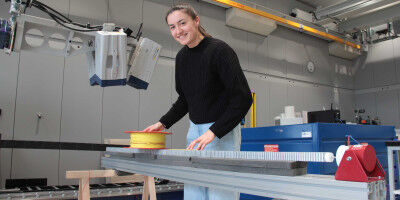
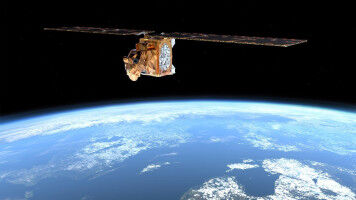
Are we alone in the Universe? This question is asked by many, but no one can yet answer it. Professor Svetlana Berdyugina , director of Istituto ricerche solari Aldo e Cele Daccò (IRSOL, affiliated with USI) and professor at the USI Faculty of Informatics, has pioneered novel methods for searching for, identifying, and interpreting life on other planets beyond the Solar System - alien life on exoplanets. "I study imprints of life molecules on the light reflected from distant planets, in the same way as we can see and study various life forms on Earth from space. Light polarisation, i.e. the direction in which light-waves oscillate, is the key to detecting and identifying complex life molecules, especially those which contribute to photosynthesis", explains Prof. Berdyugina. She has demonstrated how surface maps of distant Earth-like worlds with continents, oceans and colonies of photosynthetic organisms (similar to terrestrial vegetation and bacteria) can be reconstructed from astronomical observations using advanced numerical techniques and laboratory measurements (see picture above). In 2025, she led an international team of scientists to develop a strategy to detect photosynthetic life on exoplanets with the future NASA Flagship space mission Habitable Worlds Observatory (HWO, see the preprint ).
The NCCR Genesis is a Swiss-wide multi-disciplinary scientific cooperation directed by Prof. Didier Queloz, Nobel Prize in Physics 2019, ETH Zurich, and co-directed by Prof. Johanna Marin Carbonne, University of Lausanne. It has been selected for funding as a winner in a highly competitive government selection process (see here and here ). The purpose of the NCCR Genesis is to establish an ambitious and innovative collaboration across different fields of science in Switzerland, with the common goal of answering some of humanity’s most profound scientific questions: How did life emerge on Earth? Is the universe full of life?
As a Principal Investigator for the NCCR Genesis, Prof. Berdyugina will lead laboratory studies and AI-based computer simulations to provide models of novel polarised life signatures to be searched for on exoplanets. Beyond exoplanetary studies, IRSOL, being the leader in high-precision polarimetry in Switzerland and an affiliated institute with the USI Faculty of Informatics, has an ideal infrastructure for such a project.
Furthermore, Prof. Berdyugina will closely collaborate with other NCCR Genesis partners specialised in microscopic life and large-scale planetary processes: the SUPSI Institute of Microbiology on studying microorganisms and their biopigments from the Lake Cadagno in Ticino, University of Geneva on climate and geodynamic simulations, University of Lausanne on signatures of viral infection on microorganisms, University of Bern on remote sensing of homochirality, ETH Zurich on signatures of chemolithotrophic organisms, etc.
The NCCR Genesis intends to make decisive breakthroughs in understanding the emergence of life in a planetary context by fostering synergies across disciplines, investing in a new generation of researchers, liaising with industry, and developing innovative infrastructures. This foundational cross-disciplinary effort will keep Switzerland at the forefront of research addressing the universe’s greatest mysteries.