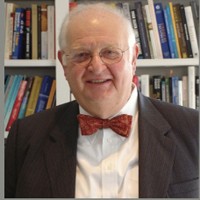
Links between money and happiness explored
The question of whether money buys happiness comes up frequently in discussions of subjective wellbeing in both scholarly debates and casual conversation. It will be one of many examined by Angus Deaton at Fitzwilliam College's Foundation Lecture on November 9 - entitled 'The Wellbeing of the World: Global Patterns of Health, Wealth and Happiness'. Recent research has distinguished two aspects of subjective wellbeing: emotional wellbeing and life evaluation. Emotional wellbeing refers to the emotional quality of an individual's everyday experience - the frequency and intensity of experiences of joy, stress, sadness, anger, and affection that make one's life pleasant or unpleasant. Life evaluation refers to the thoughts that people have about their life when they think about it. In September 2010, a paper by Angus Deaton and Daniel Kahneman (Nobel Prize Winner for Economics in 2002) concluded: "Perhaps $75,000 (£50,000) is a threshold beyond which further increases in income no longer improve a person's ability to do what matters most to their emotional wellbeing - such as spending time with the people they like, avoiding pain and disease and enjoying leisure." Angus Deaton is the Dwight D. Eisenhower Professor of International Affairs and Professor of Economics and International Affairs at the Woodrow Wilson School of Public and International Affairs and the Economics Department at Princeton University. He has previously held appointments at the Universities of Bristol and Cambridge where he gained B.A. M.A.
TO READ THIS ARTICLE, CREATE YOUR ACCOUNT
And extend your reading, free of charge and with no commitment.