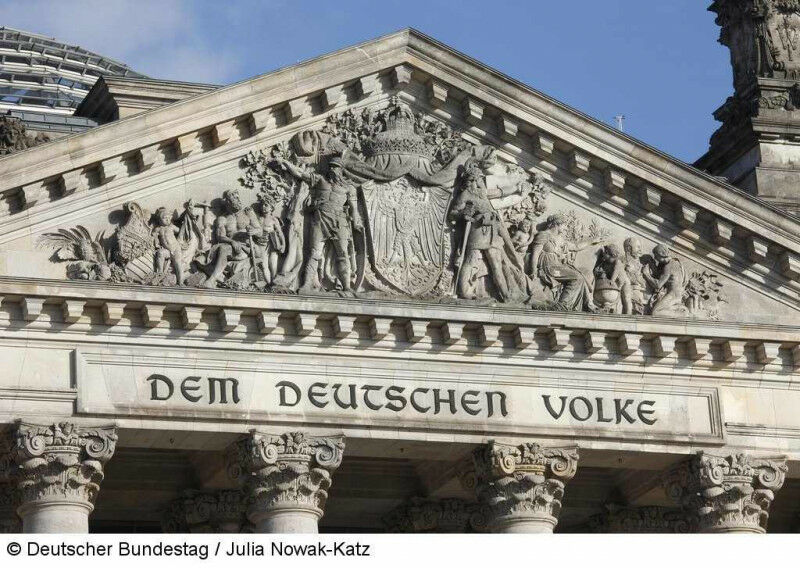
The ’Agendas and Interest Groups’ project at the University of Stuttgart presents its results [Picture: Deutscher Bundestag/Julia Nowak-Katz]
Lobbying is generally suspected of exerting an unfair influence on political decisions for the benefit of certain people in privileged positions - mostly from the business world. But could lobby groups possibly also do the opposite, and work towards making the government take the wishes of the people seriously? A research group led by Prof. Patrick Bernhagen from the Institute of Social Sciences at the University of Stuttgart answers this question in the recently-finished project "Agendas and Interest Groups". Lobbying doesn't exactly have the best reputation in broader society and in the media. However, if lobby groups are understood as representatives of various different interests in society, in an ideal world they can also improve the political representation of regular citizens. This would be the case if associations and comparable organizations addressed, prepared and communicated issues affecting people to the political system in the sense of a conveyor belt. To find out if they actually do this, the research group asked 1,003 regular citizens as well as 119 lobbyists which issues they thought were the most important. The answers were categorized into different subject areas and then compared with the roughly 300 bills which were introduced into the German parliament between 2016 and 2018.
TO READ THIS ARTICLE, CREATE YOUR ACCOUNT
And extend your reading, free of charge and with no commitment.