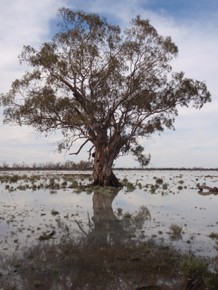
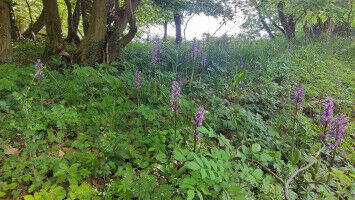
Lake Wallawalla, a nationally recognised wetland, located near Lindsay Island, about 90 kilometres west of Mildura. Photo by Department of Sustainability & Environment, Victoria.
New research shows that the Australian Government risks breaching international law if it does not fully protect wetlands listed under an international treaty in its forthcoming Murray-Darling Basin Plan. The research is the first in-depth study on how government policies and practices, and international law apply to the conservation of major wetlands along the Murray River. It was undertaken by ecologists Mr Jamie Pittock from The Australian National University and Professor Max Finlayson from Charles Sturt University, with lawyer Associate Professor Alex Gardner from The University of Western Australia. Under the Ramsar Convention on Wetlands Australia has undertaken to maintain the ecological character of the entire area of wetland sites along the river. However the researchers found that not even compromised conversation targets - as low as 20 per cent of some types of wetlands in some Ramsar sites - had been achieved. Lead-researcher Mr Pittock said that many significant wetlands in the Murray-Darling Basin are in a terrible ecological condition. 'Under the Ramsar Convention the Australian Government is obliged to allocate enough water to revive them,' said Mr Pittock.
TO READ THIS ARTICLE, CREATE YOUR ACCOUNT
And extend your reading, free of charge and with no commitment.