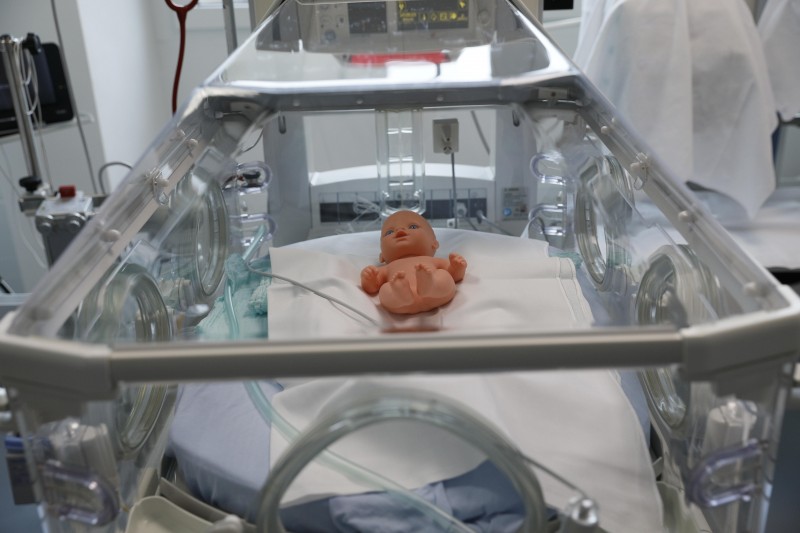
Researchers at EPFL and CSEM have developed a contactless and wireless camera system to continuously monitor the vital signs of premature babies. This system could replace skin sensors, which cause false alarms nearly 90% of the time. Preliminary tests will soon be carried out on newborns at University Hospital Zurich, a partner in the project. In the near future, premature babies kept warm in neonatal incubators could be medically monitored using cameras rather than with sensors attached to their skin. This system is about to be tested on preemies at University Hospital Zurich (USZ-CH). The underlying technology was developed by EPFL , CSEM and USZ as part of the Swiss research program Nano-Tera. The camera system was developed to improve the way babies' heart rates and breathing are monitored.
TO READ THIS ARTICLE, CREATE YOUR ACCOUNT
And extend your reading, free of charge and with no commitment.
Your Benefits
- Access to all content
- Receive newsmails for news and jobs
- Post ads