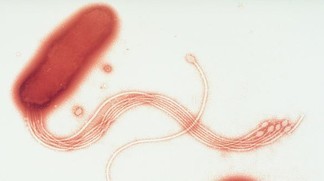
Modelling cholera epidemics: the role of waterways, human mobility and sanitation. The group of Andrea Rinaldo (ECHO - Laboratory of Ecohydrology ) investigate the role of human mobility as a driver for long-range spreading of cholera infections, which primarily propagate through hydrologically controlled ecological corridors. Their aim is to build a spatially explicit model of a disease epidemic, which is relevant to both social and scientific issues. They present a two-layer network model that accounts for the interplay between epidemiological dynamics, hydrological transport and long-distance dissemination of the pathogen Vibrio cholerae owing to host movement, described here by means of a gravity-model approach. They test their model against epidemiological data recorded during the extensive cholera outbreak occurred in the KwaZulu-Natal province of South Africa during 2000-2001. They show that long-range human movement is fundamental in quantifying otherwise unexplained inter-catchment transport of V. cholerae, thus playing a key role in the formation of regional patterns of cholera epidemics. They also show quantitatively how heterogeneously distributed drinking water supplies and sanitation conditions may affect large-scale cholera transmission, and analyse the effects of different sanitation policies.
TO READ THIS ARTICLE, CREATE YOUR ACCOUNT
And extend your reading, free of charge and with no commitment.
Your Benefits
- Access to all content
- Receive newsmails for news and jobs
- Post ads