Eric Long, Smithsonian Institution
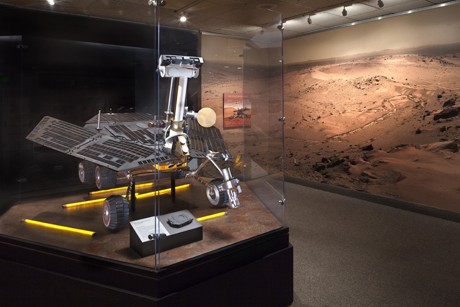
These loose, BB-sized, hematite-rich spherules are embedded in this Martian rock like blueberries in a muffin and released over time by erosion. The Mars Rover Opportunity found this cluster at its Eagle Crater landing site and analyzed their composition with its spectrometers. This discovery contributed to the scientific story of water on Mars. It's an exploration celebration: The Smithsonian Institution's National Air and Space Museum in Washington, D.C., has opened a new exhibit, "Spirit & Opportunity: 10 Years Roving Across Mars." The retrospective recounts the Mars Rovers' tandem missions in colorful, data-packed images, as well as the Cornell scientific triumphs of the rovers Spirit and Opportunity - when they scooted, scouted and scoured Earth's neighboring, iron-oxidized planet. "Mission success came about as a result of the efforts of thousands of committed people. But I think for all of us there's a great satisfaction in seeing this exhibit," said Steve Squyres, Cornell professor of astronomy and principal scientist on the mission. "Part of that satisfaction, of course, comes from the story of exploration and discovery that the exhibit tells.
TO READ THIS ARTICLE, CREATE YOUR ACCOUNT
And extend your reading, free of charge and with no commitment.