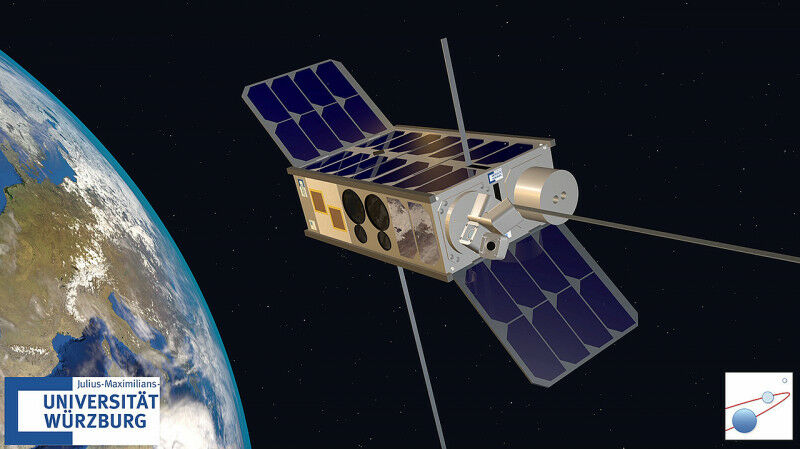
A model of the SONATE-2 nanosatellite, here artistically depicted in orbit. (Image: Hakan Kayal / Universität Würzburg)
A model of the SONATE-2 nanosatellite, here artistically depicted in orbit. (Image: Hakan Kayal / Universität Würzburg) A new Würzburg space mission is on the home straight: The SONATE-2 nanosatellite will test novel artificial intelligence hardware and software technologies in orbit. After more than two years of development, the nanosatellite SONATE-2 is about to be launched. The lift-off into orbit by a rocket is expected in March 2024. The satellite was designed and built by a team led by aerospace engineer Professor Hakan Kayal from Julius-Maximilians-Universität (JMU) Würzburg in Bavaria, Germany. JMU has been developing small satellite missions for around 20 years. SONATE-2 now marks another high point.
TO READ THIS ARTICLE, CREATE YOUR ACCOUNT
And extend your reading, free of charge and with no commitment.