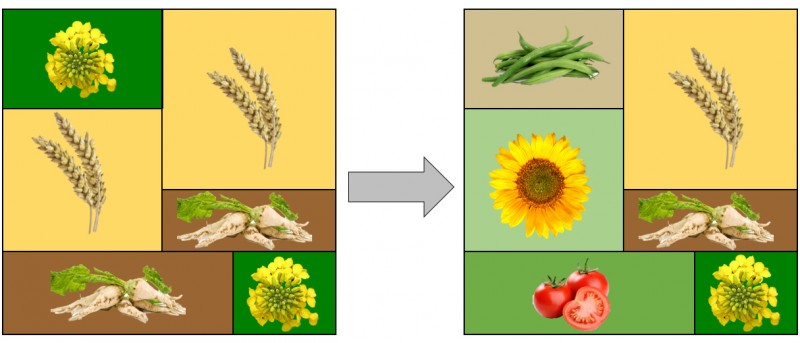
It’s all about crop diversification on fields: cultivating many different crop plants provides better living conditions for the natural enemies of aphids. (Picture: Sarah Redlich)
03/20/2018 - Crop variety in agriculture has a positive impact on the natural enemies of aphids. Farmers can use this insight to keep aphids at bay and cut down on pesticides. The greater the diversity of crops grown in agricultural landscapes is, the better natural enemies are able to control pests on wheat fields. This is because a varied landscape provides better living conditions for the aphids' natural enemies than a never-ending series of monocultures. Where wheat is grown on huge areas, ladybirds, spiders, hoverfly larvae and other enemies of aphids don't have enough food in spring, as the pest begins to populate the wheat fields not before May when they start to reproduce. Therefore, the enemies move on to places farther away where there is more abundant supply of food. When pest infestation occurs, the aphids thus encounter ideal conditions since their enemies are low in numbers.
TO READ THIS ARTICLE, CREATE YOUR ACCOUNT
And extend your reading, free of charge and with no commitment.