New climate science shows potential for higher sea-level rise
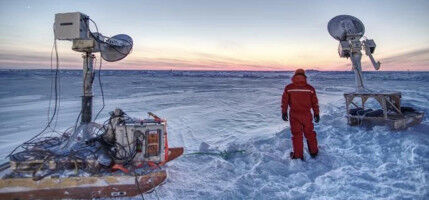
Sea-level rise has accelerated in recent decades, mostly due to an increased contribution of the Greenland ice sheet. A senior scientist from the Intergovernmental Panel on Climate Change (IPCC) will discuss the latest climate science, including the potential for higher sea-level rise than previously projected, at ANU on Tuesday. Dr Valérie Masson-Delmotte, Co-Chair of IPCC Working Group I, will discuss the latest insights on human-caused climate change, including new knowledge on sea-level risks from the Antarctic ice sheet showing the potential to double sea-level rise by 2100. "Sea-level rise has accelerated in recent decades, mostly due to an increased contribution of the Greenland ice sheet," said Dr Masson-Delmotte, a senior scientist from Laboratoire des Sciences du Climat et de l'Environnement, Institut Pierre Simon Laplace, in France, who is visiting ANU this week. "Summer warming above the Greenland ice sheet has been strongly related to human influence on the climate system. Sea-level rise is enhancing coastal submersion risks." A panel discussion chaired by ANU Climate Change Institute Director Professor Mark Howden, with experts on marine ecosystems, sea-level rise and health, will follow Dr Masson-Delmotte's lecture. Dr Masson-Delmotte said recent extreme events in Syria, France and the Arctic could be attributed to human influence on the climate system.