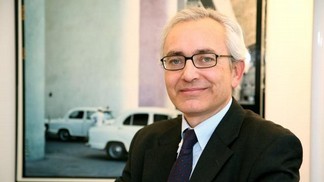
Luca Ortelli is the new director of the Institute of Architecture and the City in EPFL's School of Architecture, Civil and Environmental Engineering (ENAC). He succeeds professor Bruno Marchand. Energy and habitat issues will be the centerpiece of research that he plans to lead during the four coming years in collaboration with various ENAC laboratories. Professor Ortelli began his term as Institute Director in July 1, 2011. Ortelli arrived at EPFL in 1997. In the same year, he oversaw completion of the Palais Franscini, a unique project on the banks of the Ticino river that brought together five cultural institutions and housed the cantonal library and archives. On the EPFL campus, he splits his time between teaching and research, and takes evident pleasure in interacting with students. The students appreciate his dedication as well, awarding him the ENAC teaching prize in 2005 and 2007. Here's a brief interview with this philosopher-architect. How would you define this discipline? An architect maintains a balance between three pillars: art, science and technique. But I consider architecture first of all as an intellectual endeavor and the academic environment is ideal for cultivating this aspect. Architecture theorizes, interprets and envisages that which has been, is and is yet to be. I would like for this to be a fundamental mission of teaching starting with the first year, because it has an undisputable social implication. It makes the invisible visible. But this way of looking at things could very well be endangered today. The pressure to globalize could threaten architectural diversity. What was the most memorable moment of your career?
TO READ THIS ARTICLE, CREATE YOUR ACCOUNT
And extend your reading, free of charge and with no commitment.
Your Benefits
- Access to all content
- Receive newsmails for news and jobs
- Post ads